

The latest workplace health report reveals that China sees over 10,000 cases of death from overwork (karoshi) annually, and this is merely the tip of the iceberg; the actual figures could be several times higher. Every life lost serves as a stark reminder that the body’s limits are not infinite, but are silently eroded by chronic stress.
Social media often packages ‘996’ as a badge of honor, and celebrity influence leads young people to mistakenly believe that overtime is a prerequisite for success, overlooking the body’s breaking point and emotional alienation. When we treat health as a tradable asset, the ultimate result is only greater loss.
True growth often happens in the gaps of rest, for it is only when we slow down that the brain can reorganize thoughts and the body can regain vitality. If we treat every pause as an investment, the future yield will be an unexpectedly bountiful harvest.
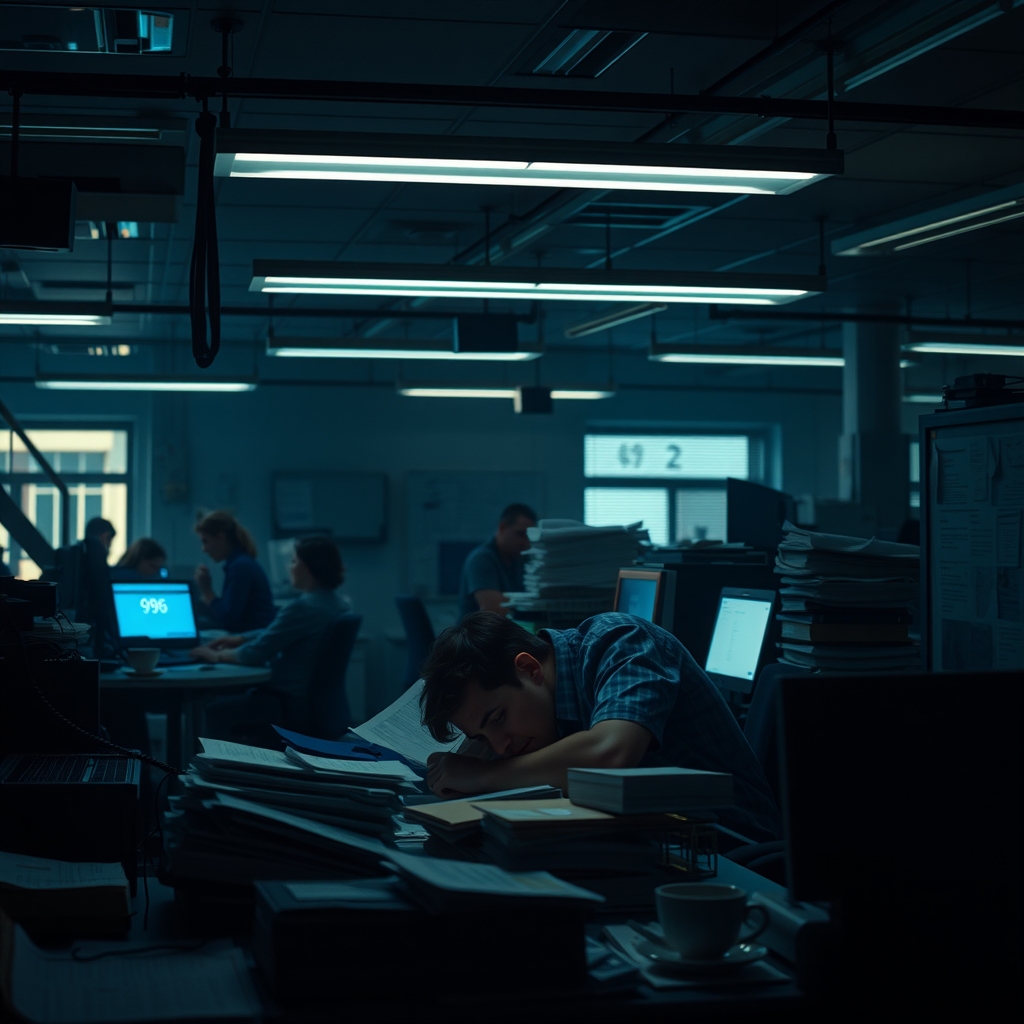
In the dead of night, I often see my own reflection in the mirror—eyes marked by trails of fatigue and a deep, gnawing doubt about my self-worth. Every moment of self-pity feels like adding weight to my own shoulders, making each step forward heavier, yet it is also in this darkness that we catch a glimpse of faint light.
Meticulously curated lives on social platforms drive us to compare, as if everyone else’s success is the benchmark for our own. So we scroll through our phones late at night, while our hearts ask: What do I truly want? A glamorous exterior, or inner peace?
If we treat life as a never-ending marathon but never give ourselves a chance to drink water, can we really call ourselves true runners? Perhaps true victory lies in learning to maintain a love for life even amidst exhaustion, letting every breath become the momentum to set sail once more.

At an internet company, product manager Xiao Zhang worked until 2 AM daily, sacrificing weekends as well. Three months later, he was hospitalized for a gastric ulcer, diagnosed as a ‘stress ulcer.’ His story lays bare the devastating impact of overwork on the digestive system and highlights the heavy price companies may pay for their blind pursuit of performance.
Entrepreneur Li Chen saw his company’s valuation exceed tens of millions, yet chronic late nights led to insomnia. During a critical funding negotiation, he was mentally foggy and ultimately lost the investment. His experience teaches us that behind the glitter often lies a neglect of health, and sustainable success requires the dual pillars of physical and mental well-being.
Fresh graduate Xiao Li memorized for ten hours a day to compete for a spot at a prestigious graduate school. Come finals, anxiety caused his grades to plummet, and he ultimately had to settle for an ordinary position. His journey reminds us that blindly chasing external validation while ignoring self-regulation will inevitably exact a steeper cost.

—— END ——
Saw this linked in a WeChat work group this morning. The stat about overtime-related health issues hitting post-95s hardest tracks perfectly with what I see in my department. Three folks quit last quarter alone citing ‘sudden cardiac risk’ warnings from their annual physicals. Companies still treat the report as PR material rather than a budget line item for hiring more heads.
Reading this on 11.11 while the warehouse guys downstairs are drowning in parcels. The ‘always on’ culture mentioned here isn’t a stat, it’s just Tuesday for logistics. Hope the report actually pushes some policy teeth this time.
Reading this on 11.11 lunch break, the timing is ironic. Our team’s ‘health check’ this year was basically a blood pressure cuff and a questionnaire asking if I feel ‘happy’. The report mentions ‘psychological safety’ but my manager still messages ‘are you there?’ at 10 PM. Data looks good on paper, reality is still grinding.
Saw this report circulating in our HR group chat yesterday. The bit about ‘presenteeism’ being higher than absenteeism hits hard — everyone’s at their desk till 9pm but actual output? Questionable. My team lead tried implementing ‘no meeting Wednesdays’ last month, lasted two weeks before the VP killed it. Reports are nice, but until the KPI system changes, it’s just paper.
Saw this linked in a WeChat work group. The overtime stats match what I’m seeing on the ground in Shenzhen — everyone’s “voluntarily” staying late to hit Q4 targets before CNY. Irony is today’s 11.11 and I’m reading this at 10pm in the office instead of grabbing the sales.
Saw the headline on our internal Slack channel this morning. The burnout stats for tech hubs like Shenzhen and Hangzhou align way too closely with what I’m seeing in my own team — 60+ hour weeks are basically the default now. Curious if the report breaks down ‘presenteeism’ vs actual sick leave uptake; my HR dashboards show people just… don’t take the days even when they have them.
Reading this on 11.11 afternoon, the irony isn’t lost on me. Everyone’s hunting for coupons while the report says burnout rates hit a new high in Q3. My team just lost two seniors last month — ‘health management’ feels like a buzzword when the KPI sheet lands. Curious if the report breaks down differences between tier-1 and new tier-1 cities?
Saw this on my feed during lunch break. The ‘always on’ culture data tracks perfectly with what I’m seeing in my department — people wearing burnout like a badge of honor. My manager actually forwarded the PDF to our group chat yesterday with zero irony. We need fewer reports and more headcount, but sure, let’s discuss ‘resilience training’ again.
The musculoskeletal disorder stats track exactly with what I see in the office. Everyone’s got a stiff neck or wrist issues by 30. Standing desks help posture but the real killer is the 10pm Slack ping. Q4 crunch makes “leaving on time” a joke.
Saw this report circulating in my WeChat groups yesterday. The burnout numbers for tech in tier-1 cities track with what I’m seeing — my team lost three seniors last month alone. Hope the policy recommendations don’t just stay on paper this time around.