
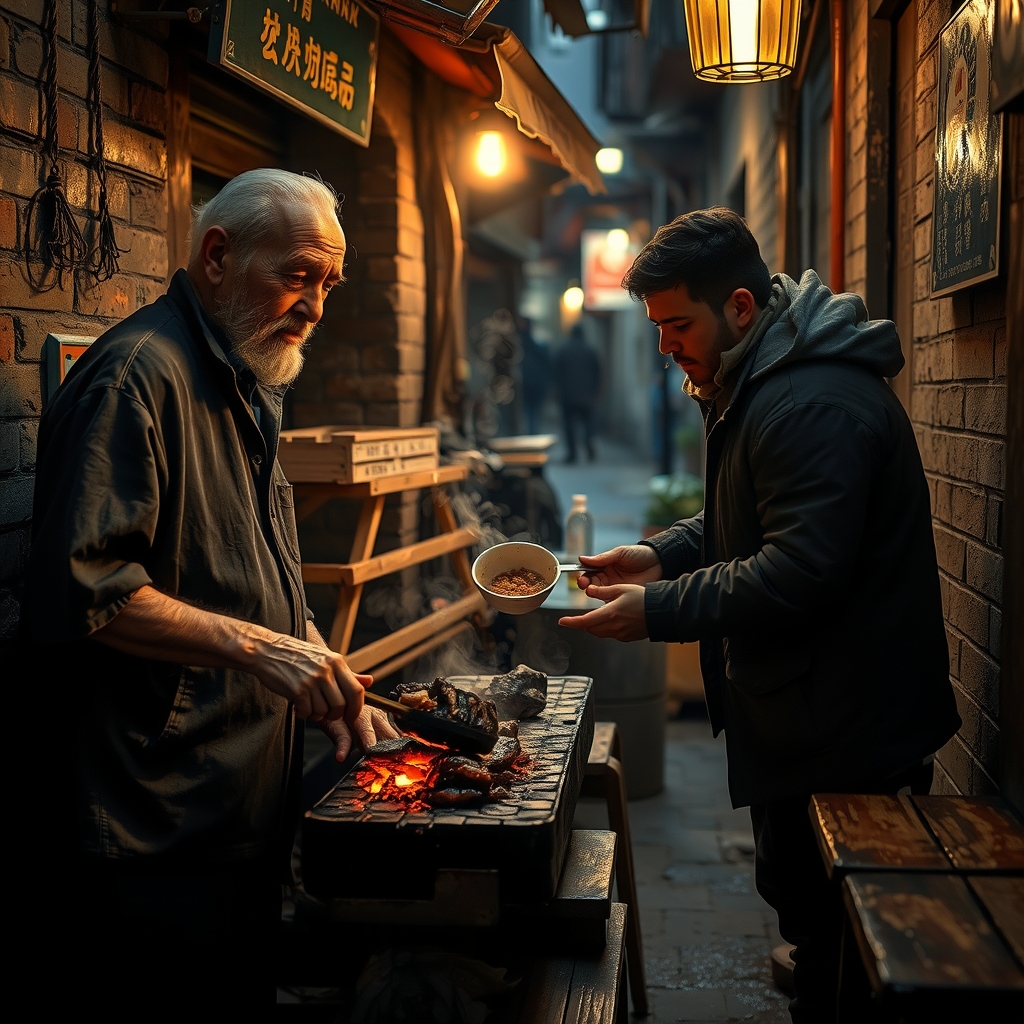
The city never announces its hunger in broad daylight. More often, it laments in the fractured alleyways, whispers in the residual warmth of charcoal fires just extinguished, flickers like wandering souls in untimely neon lights. I once believed that ‘finding hidden food’ was no more than a game of chance—a surprise with every bite, or a step into an unseen trap. But when I truly ventured into those regions forgotten by travel guides, I realized the real ‘minefield’ is never marked on any map. It resides in the eyes of every daring soul who deviates from the main road, still holding a fraction of apprehension.
Taking a wrong street, paying a premium for bland mediocrity, sitting before a flashy yet hollow table, yet tasting nothing—this is the silent burden behind every food explorer. We’ve all experienced it: soaring ratings propped up by commercial hype, tastebuds obscured by meticulously angled presentations, and recommendations from enthusiastic owners that turn out to be tourist traps. The city may open its arms, but it guards its secrets jealously. Descending into its underground realm is arduous, walking like traversing a tightrope with no safety net. This apprehension, however, is precisely the fuel of desire.
Yet, it is precisely this apprehension that kindles a deeper desire. What, then, is a ‘minefield’ if not the violent collision of expectation and reality? Is a ‘hidden treasure’ perhaps reality, in a single moment, convincing us that the city still has something authentic to offer? I have decided no longer to chase those empty perfect scores. Instead, I begin to listen to the city’s whispered musings, let every alleyway dictate my direction, and let every vendor’s story lead my palate on a journey.
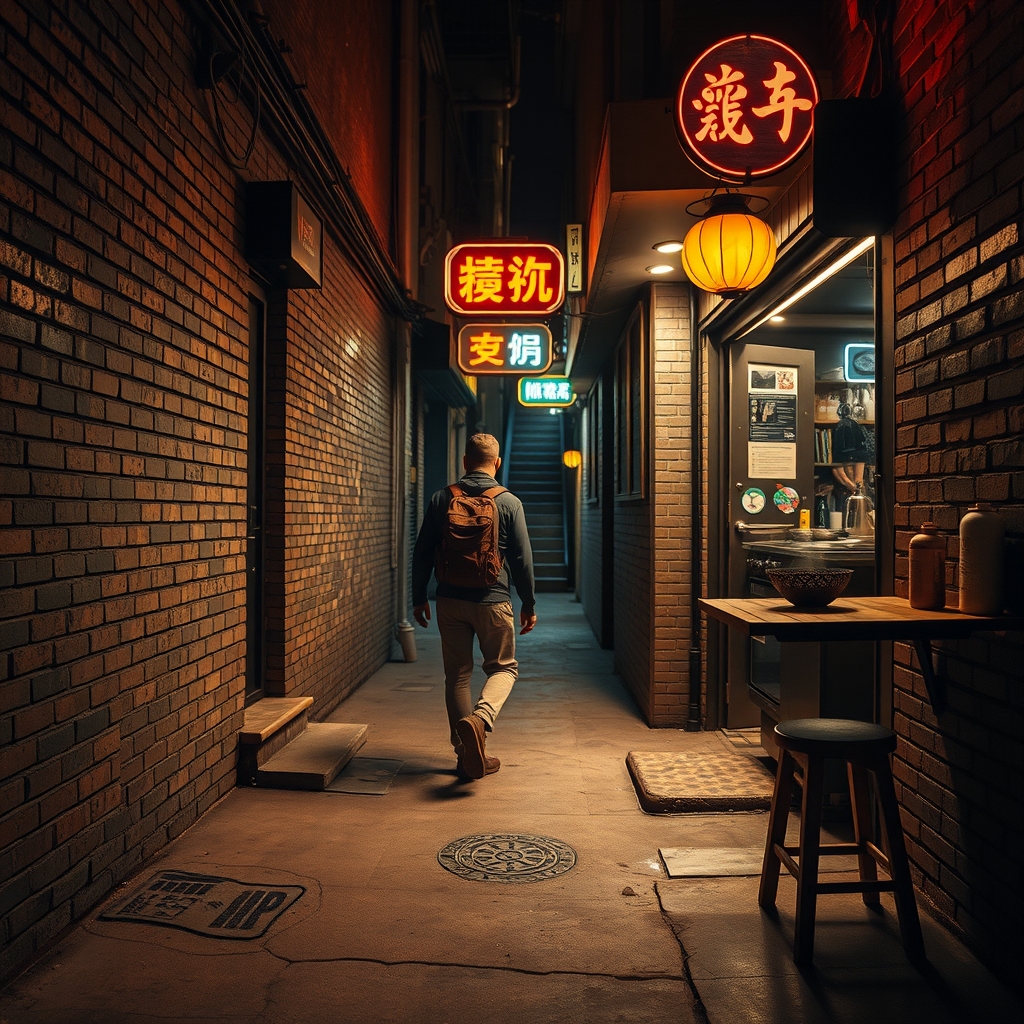
The second leg of my journey led me to a forgotten market with rents as low as its stories are high—a place that only awakens after the sun has completely set, shrouded in a city of glass-and-mooring skyscrapers. Here, a century-old establishment serves soy milk and fried dough sticks, with a twist: the soy milk is brewed with red dates and goji berries, which local elders insist makes breakfast both nutritious and poetic. The queue is long, stools teeter, and the air is thick with steam rising from countless ceramic bowls, each its own universe. I take a seat, resting my elbows on a wooden table scarred with marks, ready to witness another hidden culinary drama of the city.
The turn of events became a masterclass in the economics of desire. The stall owner, a woman in her sixties with fingers tied in intricate knots like those on her hand-embroidered apron, explained that the red dates come from specific mountain counties, harvested only once a year, and the soy milk’s fermentation time is governed by the lunar calendar. This is not merely a breakfast stall; it is a treasury of intergenerational knowledge. Every bowl carries the weight of tradition, the sigh of the earth, and the hope of a community refusing to be erased by rapid urbanization. The ‘minefield’ here is not a trap, but a threshold requiring patience, reverence, and a willingness to listen to stories older than the city itself.
When I finished the last spoonful, feeling the viscous soy milk’s lingering warmth in my throat, I sensed a deep connection to a rhythm that pulsed long before my arrival. Though the city modernizes with clamor, it hides eternal fragments in these deeply concealed corners, offering this timelessness to those willing to slow their pace, step out of the neon-lit clamor, and face the towering piles of takeout boxes. The crisp-yet-soft fried dough stick, with its charred exterior and soft interior, perfectly mirrors the city’s own contradictions: resilient on the outside, soft at heart. I realized that every so-called ‘hidden’ food is, in fact, a mirror reflecting the values, struggles, and fates of those who cook it. To seek them out is, at its essence, a form of cultural archaeology.
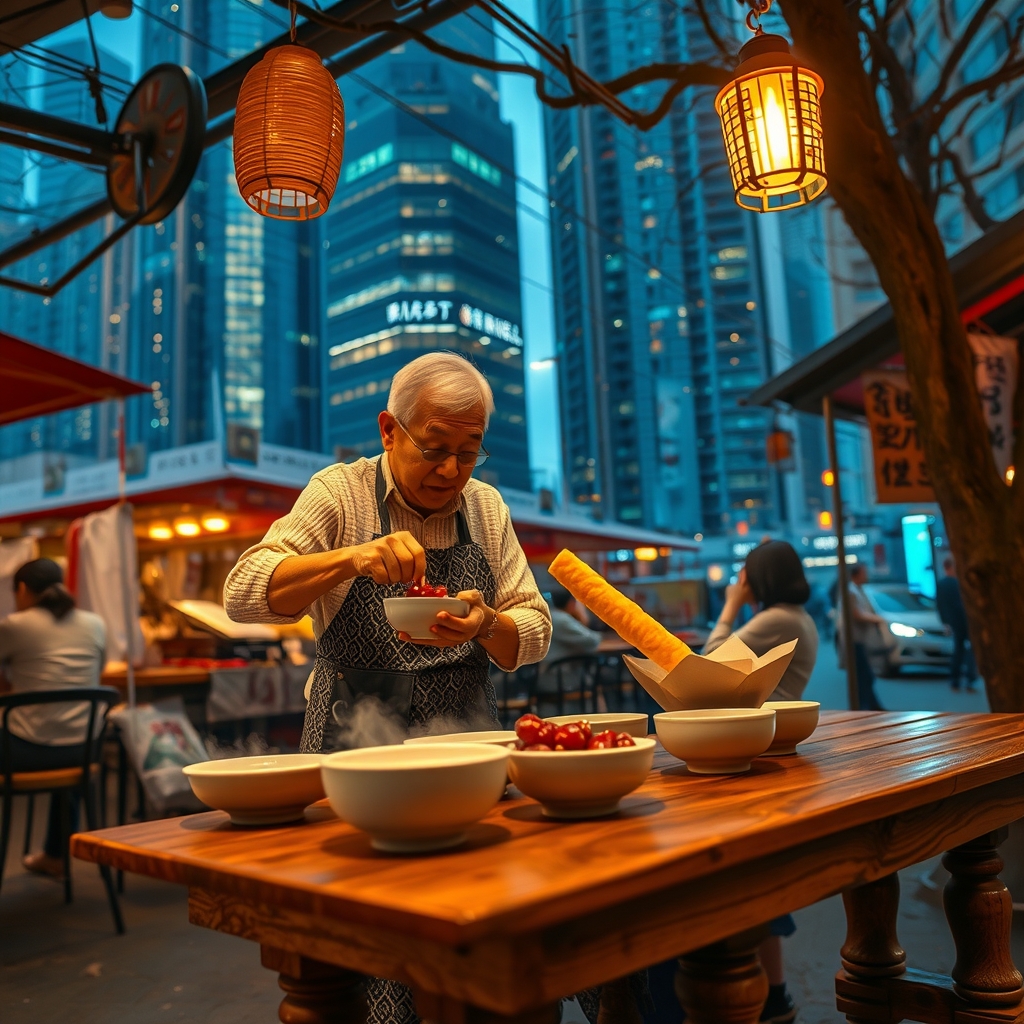
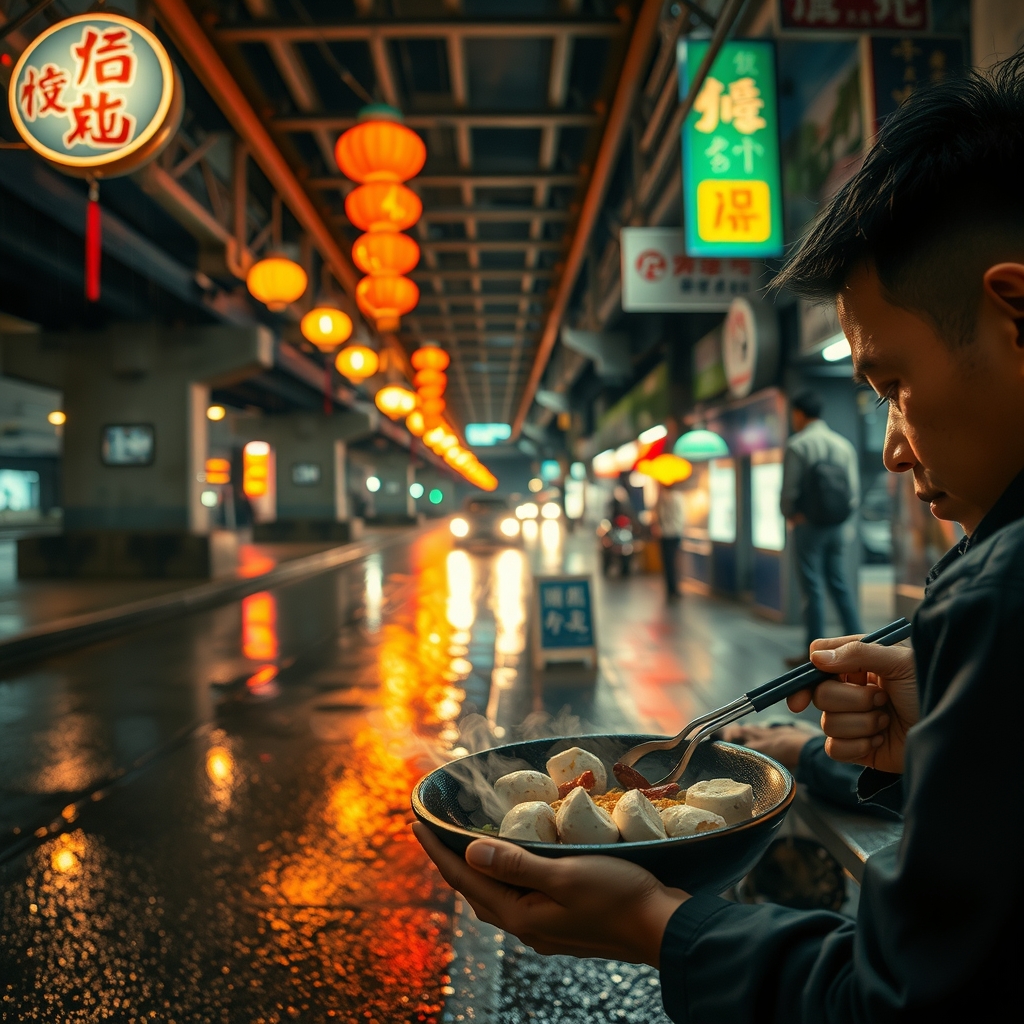
My third stop was a nocturnal haven beneath a bridge, where the river’s whisper provides a sustained low rhythm, accompanied by the clinking of copper pots and the laughter of dinner time. Here, the stars are not a single dish but a series of small plates: sour pickled mustard greens with century eggs, spicy grilled lotus root, and a clump of soft tofu brain that sways on the tongue, tasting profound earthy freshness. The environment is a kaleidoscope of colors—neon lights reflected on damp pavement, the amber glow of oil lamps, occasional flames erupting from the pot, deftly flipped by a chef as if conducting an orchestra. Every bite is a palpitation, every breath a rhythm, and I find myself swaying to the city’s nocturnal pulse.
The logic of this nocturnal feast is rooted in the city’s marginalized corners, where nocturnal insomniacs, couples seeking quiet corners, and unfinished-shift workers converge. The food here is profoundly simple, often born of life’s inevitable transformation into art, refined over decades. The sour pickled mustard greens are sharp enough to linger on the teeth, with a long aftertaste—a witness to a community’s thriftiness, turning the ordinary into the extraordinary. The spicy lotus root offers satisfying crunch and a lingering aftertaste, refracting the city’s ability to find passion in the most unexpected places. And the soft tofu brain, harmless yet unparalleled in satisfaction, is an absolute equivalent—minimal cost, yet delivering priceless contentment.
At this moment, the ‘minefield’ I once feared has completely dissolved. There is no fear here, only the pure joy of discovery imbued with the spirit of everyday life. The city is no longer a to-do list, but a living, breathing entity that nourishes me in the most unexpected moments, be it literally or metaphorically. The bridge beneath my feet has become a metaphor for the city itself: a structure that connects, supports, and sometimes obscures, yet always, always provides a path forward in the dim night light and the shared silence of strangers over a bowl of soup.
— END —
That alley behind the textile market on Line 3 — the lamb skewers stall with the blue plastic stools. Went there last Tuesday after night shift. Owner still remembers my usual: extra cumin, no chili. City doesn’t announce hunger, but it remembers the ones who show up at 2am.
Saw the dumpling spot on 3rd mentioned here. Went last Tuesday after work – the line was out the door but moved fast. Worth the 20 min wait for the chili oil wontons. Thanks for the heads up, saved me from another mediocre lunch near the office.
Title sounds too good to be true “pitfall-free” lol. But the spot on 3rd St mentioned in the second paragraph? Legit. Went there last week before the cold snap hit. Good call on the dumplings.
That alleyway dumpling spot near the old library? Went there last Tuesday based on a similar rec. Line was out the door by 6:30 but the chili oil noodles were worth the 40-min wait. Good list, saved for next weekend’s探店 (tàn diàn – food hunt).