
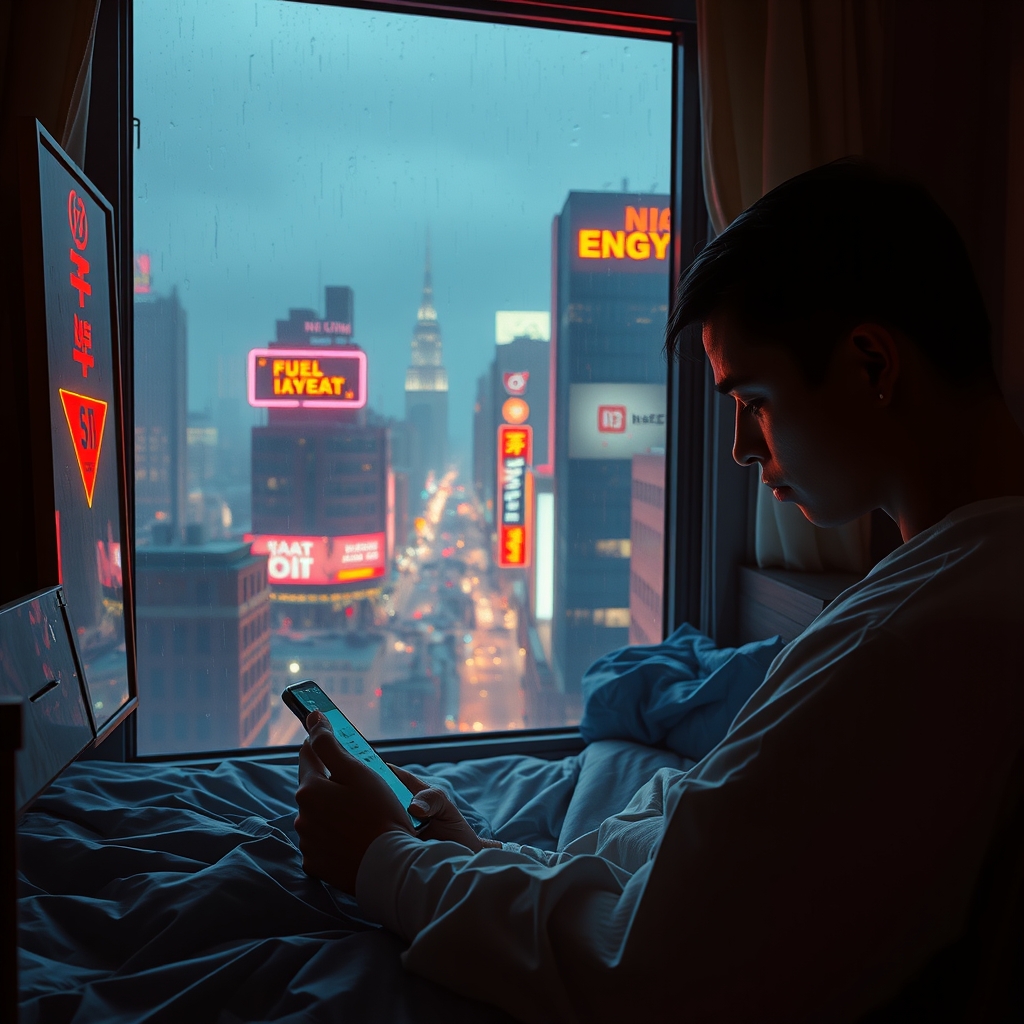
The human body is no longer merely a container of flesh and blood. Gene editing, neural implants, and mechanical prosthetics, once confined to cyberpunk novels, are now advancing toward mainstream adoption at a staggering pace. Parkinson’s patients have reclaimed mobility through deep brain stimulation, and visually impaired individuals have regained sight through visual implants. These cases should rightfully be seen as milestones of progress, yet they also probe the edges of ethics. When the word ‘health’ is replaced by ‘upgradeable,’ are we silently stepping into a world where everyone could become a customized product? The boundaries of the body are being redefined, along with the identity anxiety and existential reassessment that come with it.
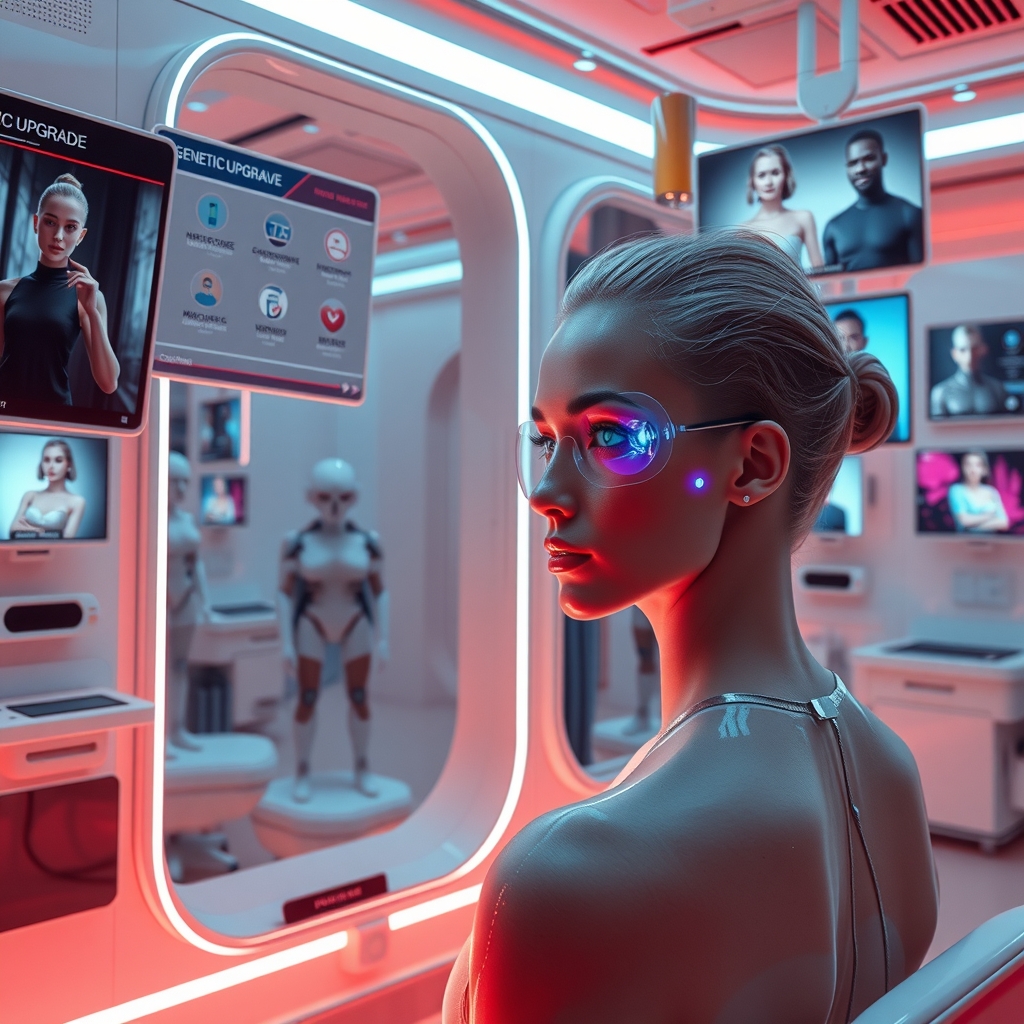
What’s even more dazzling is the rise of ‘beauty-class’ bio-enhancements. From hyaluronic acid injections to gene modification packages, the younger generation is beginning to view themselves as upgradable hardware platforms. On social media, refined faces alongside genetic test reports are presented side by side, becoming a new standard for measuring personal value. Behind this ‘self-upgrade’ craze lies the profanation of nature and a distorted yearning for perfection. While chasing radiant appearances, are we also erasing the rough imperfections that make us unique? When everyone can afford some degree of ‘upgrade,’ where will true scarcity truly lie?
Identity fluidity was meant to be free, but within customizable flesh, it has transformed into an endless race. No longer is it just ourselves reflected in the mirror, but a constantly polished and reshaped brand image. We no longer ask ‘Who am I,’ but ‘Who can I be transformed into?’ This fundamental misalignment turns the body no longer into the cornerstone of existence, but into a raw material that can be bought, upgraded, and discarded. The tragic hues of cyberpunk emerge precisely in these blurred boundaries: when humans are no longer human, when flesh becomes part of code, where does spirituality belong?
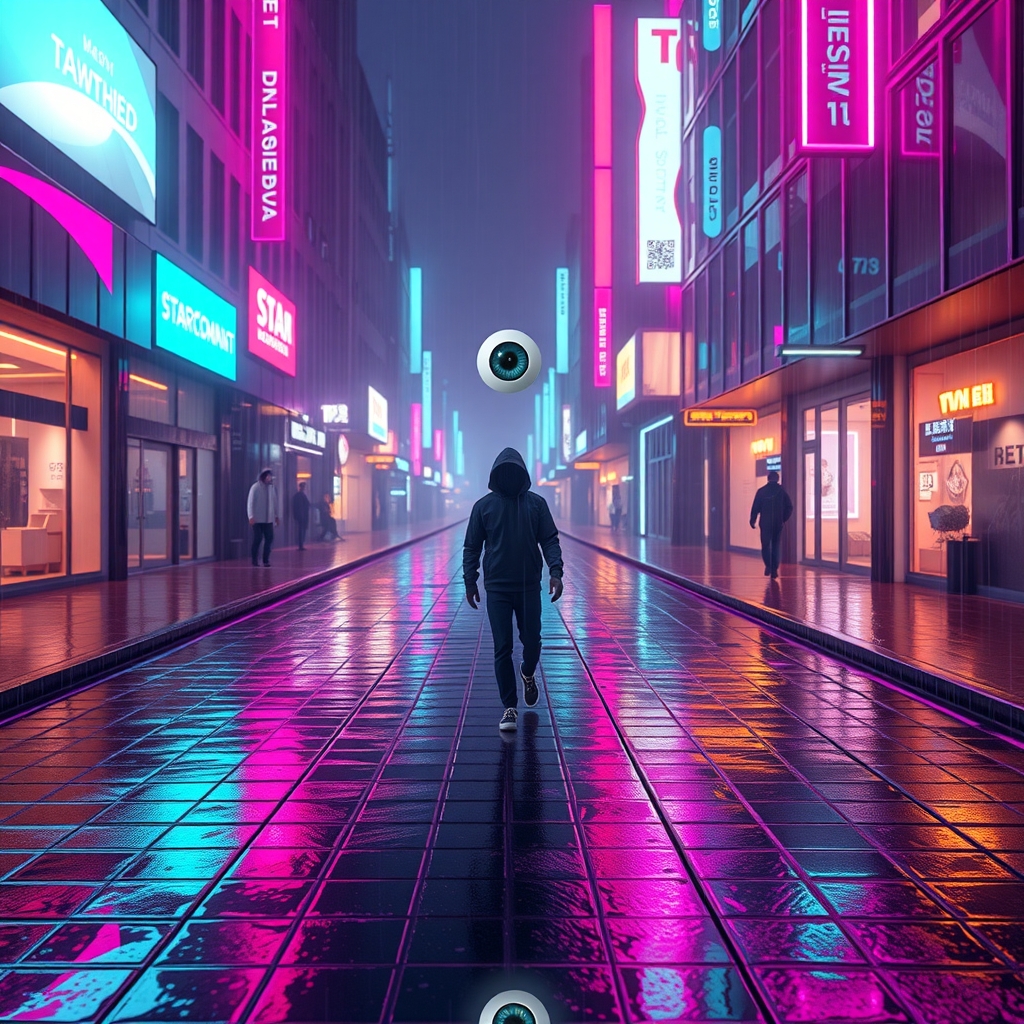
Every corner of the city is now filled with eyes. Facial recognition cameras, like ubiquitous satellites, record the footsteps of passersby, transforming anonymous streets into queryable databases. Freedom in spaces that should be public has become as fragile as transparent glass under real-time tracking. We have grown accustomed to swift, effortless face-scanning entrances and payments within convenience, yet few realize this convenience comes at the cost of sacrificing private terrain. When every action is coded, categorized, and scored, the boundaries of public life are no longer physical fences, but invisible cages drawn by algorithms.
What’s even more suffocating is the rise of predictive governance. Behavior models based on big data predict potential illegal risks, even emotional fluctuations, with police and resources pre-deployed. While ‘prevention seems to improve governance efficiency,’ it effectively locks away individual exploratory spaces in the shadows. We walk in the shadow of algorithmic prognostication, and the pressure of self-discipline no longer stems from moral constraints but from the self-correction of data profiles. Minor mistakes that should be tolerable are infinitely amplified in the permanent storage of digital footprints, creating a comprehensive, inescapable state of transparency.
The price of this transparency is the gradual stripping of our sense of control over our own lives. Thoughts, emotional fluctuations, even moments of error that once belonged to the private sphere are now digitally captured, archived, and scrutinized. We are no longer protagonists of life, but nodes in data flows. That suffocating feeling of being watched is especially pronounced in the glow of midnight lights—when the screen turns off, a sense of inner emptiness unalarmed by algorithms arises naturally. The depiction of an ‘all-knowing government’ in cyberpunk is gradually turning from fiction into the reality we breathe.
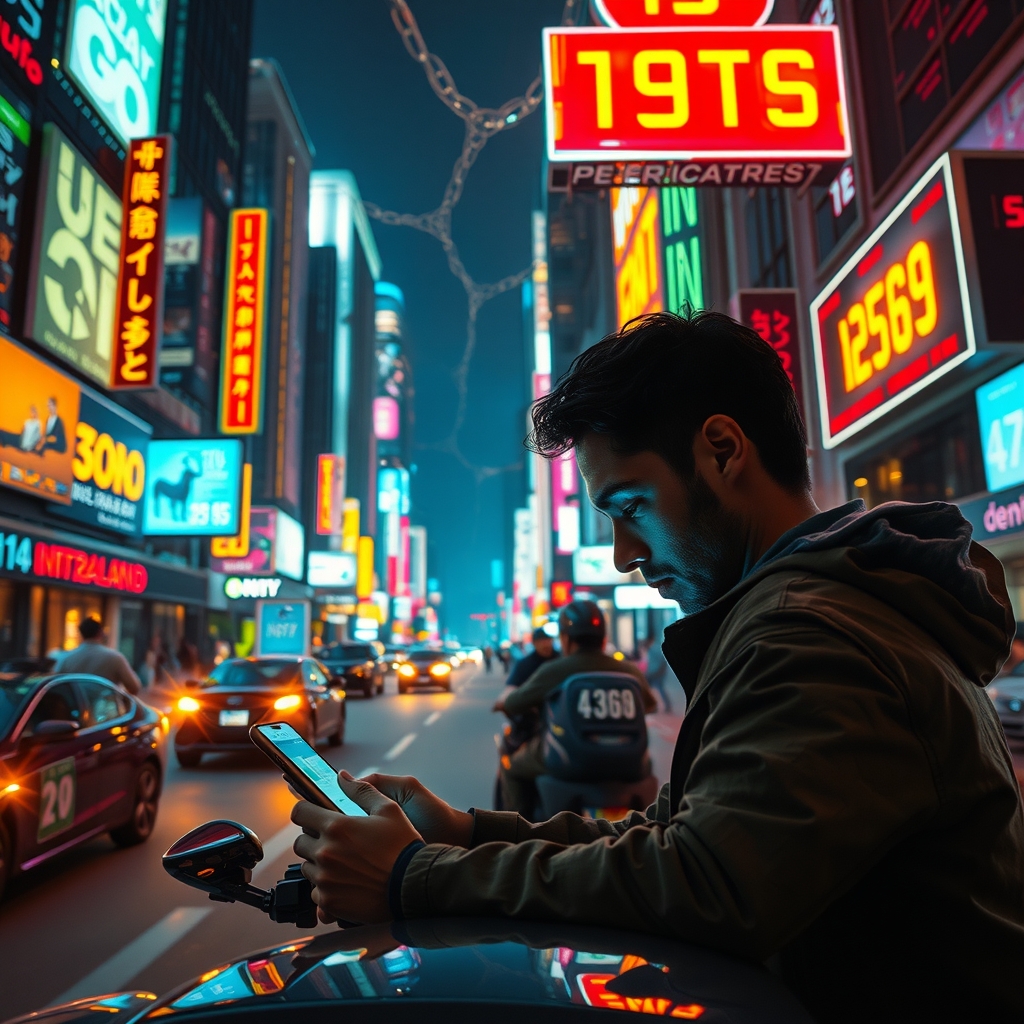
In the digital jungle, we have become fodder for algorithms. Every order taken by food delivery riders, every tip given to livestream hosts, and every click by content creators are transformed into precise data of traffic and revenue. Beneath the glossy veneer of the platform economy, countless individuals are driven, judged, and eliminated by invisible rules. We are accustomed to equating time with money, yet rarely scrutinize how the algorithms behind this define ‘value.’ When creativity, emotion, and labor are all quantifiable and comparable, where does genuine humanistic care go? This ‘peace’ governed by algorithms is, in fact, a gentle stripping of individual autonomy.
The explosion of AI-generated content pushes this deprivation even deeper into the abyss of creation. From article polishing to video editing, from music composition to design patterns, machines produce aesthetically fitting works at a staggering pace. While this undoubtedly expands the boundaries of productivity, it also puts countless professionals at risk of replacement. While we marvel at technological miracles, are we overlooking the healing and exploration inherent in the creative process itself? When anyone can ‘generate with one key,’ where lies the scarcity of originality? With the artistic threshold fully opened, finding that uniquely human touch amidst the chaotic flood of information becomes a lavish longing.
Being constantly online and on standby has become a standard for many professionals. The immediacy of messages and the timeliness of replies have become invisible indicators of professional competence. However, this never-ending connection is in fact a continuous erosion of personal boundaries. Chat boxes after work, late-night inspiration bursts, weekend work reports—all time fragments are sliced, archived, and reused. In chasing the efficiency wave, we gradually lose the right to do nothing, to think leisurely. This ‘digital sweat’ accumulates in tired bodies, forming an indescribable professional burnout, a deep soul depletion after the neon fades.
—— END ——
The bit about proprioception hacking hit home. My cousin got the motor-cortex patch last month for his tremor, says he ‘forgets it’s there’ until he tries to explain the sensation to his grandma. We’re definitely past the ‘container’ phase.