
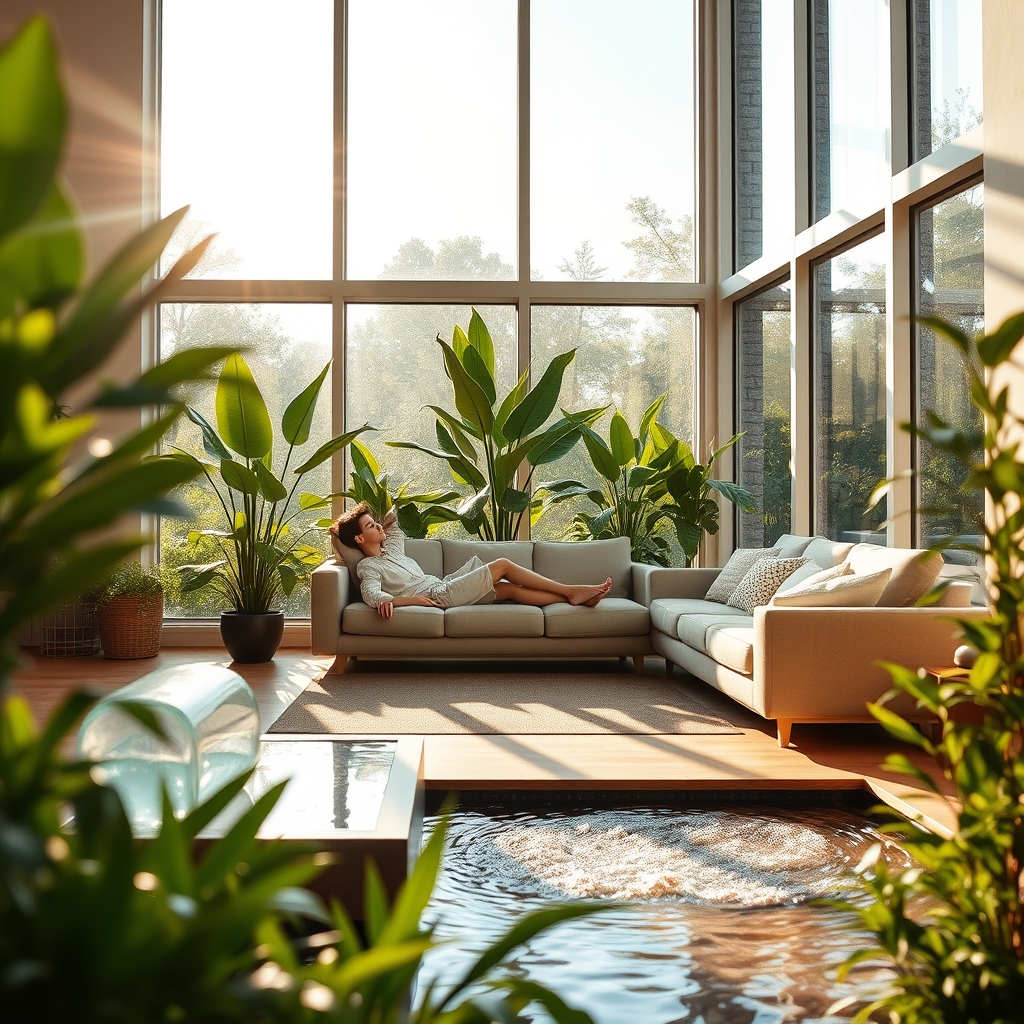
Home furnishing trends in 2026 are undergoing a profound transformation. This goes beyond simple product updates and represents a comprehensive upgrade in lifestyle and consumption concepts. In today’s fast-paced world, people’s understanding of home life is becoming increasingly diverse and personalized. From functionality to emotionality, from practicality to artistry, every aspect of home consumption tells the story of people’s aspiration for and pursuit of a better life.

In 2026, sustainability and eco-friendly principles will take center stage in home furnishing. As environmental awareness continues to grow, consumers’ selection criteria for home products are evolving subtly. No longer focused solely on aesthetics and functionality, more consumers are paying attention to materials, craftsmanship, and the environmental performance throughout a product’s entire lifecycle. This shift reflects not only people’s concern for our planet but also their pursuit of a healthier lifestyle. In this context, home products made with renewable materials and designed for energy efficiency and environmental friendliness will be highly sought after in the market.

The advancement of smart home technology is redefining the boundaries of domestic life. By 2025, with the maturation and widespread adoption of technologies like 5G and the Internet of Things, smart homes will transition from being a luxury for the few to becoming standard equipment in more households. From smart security systems to smart appliances, from intelligent lighting to home control centers, technological progress is making home life more convenient, comfortable, and secure. The application of these technologies not only enhances daily convenience but represents a comprehensive improvement in quality of life. In the realm of smart homes, every detail is infused with the warmth of technology and human care.

—— END ——
Honestly, who can even keep up anymore? I just finished painting my living room that specific shade of sage green everyone obsessed over last year, and now you’re telling me everything is changing again? My wallet is literally crying.
Honestly, if this means we’re finally moving away from that sterile, all-white hospital look, I’m all in. I just hope these upcoming styles are actually affordable and pet-friendly, not just fragile aesthetic traps that get ruined by one spilled coffee.
Who actually updates their entire living room every couple of years just because the industry decided on a ‘profound’ shift? I’m still trying to pay off my mid-century modern obsession from 2021. Just give me a comfortable couch that resists pet hair.
I’m already exhausted by designers pushing hyper-futuristic concepts every single year. Can we just go back to actual comfortable couches instead of making everything look like a sterile spaceship? My living room needs warmth, not a software update.
idk about all this future prediction stuff. pretty sure most people will keep buying the same cheap flatpack mdf boards because solid wood costs a kidney now lol.
those earthy tones look great on paper but it’s a nightmare to keep clean if you have kids. cool concept but maybe not for everyone.
Those sustainable materials usually cost double and don’t last half as long. I’ll stick to my vintage stuff until these ‘trends’ become affordable for normal people. Cool visuals though.
Seeing a lot of this “smart-bio” talk lately. Sounds expensive. I’ll believe the 2026 sustainability shift when IKEA starts selling modular solar sofas for under $500. Until then, it’s mostly for the high-end crowd. 额, not sure about the AI integrated beds either.
i feel like we see these “trends” every year and nobody ever buys the weird modular stuff. looks like a spaceship. i do like the earth tones though. nice to see less gray. 6.
Haha, spot on, gabe_p! Some of those modular pieces definitely belong on Mars rather than in a living room. 😂 But I’m totally with you on the earth tones—it’s so refreshing to finally say goodbye to the all-gray era and bring some actual warmth back!
Yeah, indeed. Being in the industry, I can confirm the shift we’re seeing this spring is pretty massive. Buyers are definitely leaning into the whole adaptable living concept way more than they did back in ’24 or ’25. Nice write-up!
Spot on with the shift toward modularity. I’ve noticed more clients asking for regional craftsmanship over mass-produced ‘smart’ pieces lately. The focus on biophilic elements really resonates with what we’re seeing in the Q1 projects this year. Nice to see someone finally acknowledging that the “tech-heavy” phase is cooling off in favor of tactile comfort. Good read!
Thanks, Alex! It’s great hearing this from someone working directly with clients. People are definitely getting tech fatigue and craving that authentic, tactile warmth again. I’d love to see how those biophilic Q1 projects turn out!
Spot on with the shift toward tactile textures. I’ve been seeing a huge spike in demand for “sensory retreats” in my recent projects this quarter. It feels like we’re finally moving past that phase where everything had to be a “smart” screen. People are definitely craving more organic, grounded materials to balance out the digital overload we’ve been living through. That bit about flexible, non-permanent zoning is definitely the standard for 2026.
Totally agree with the focus on “emotional hubs” mentioned here. I’ve been seeing a huge shift in my recent projects where clients are ditching the sterile minimalism of the early 20s for much warmer, tactile textures. It feels like we’re finally prioritizing how a room feels rather than just how it looks on a feed. That point about modular workspaces is also spot on—people are done with “temporary” desk setups.
Spot on with the shift toward tactile materials. After the heavy focus on smart tech last year, it feels like people are finally pivoting back to textures that actually feel like “home” rather than a lab. I’m seeing way more recycled wood and organic fabrics in the catalogs this season. Definitely matches what my clients have been asking for lately.
The point about modular setups is spot on. I’ve been seeing this transition in my projects all through Q1. It’s funny how we used to think “smart homes” meant just voice assistants, but now in ’26 it’s really more about how the materials and space respond to our actual movement. Finally moving away from that rigid minimalist phase. Good read!
That bit about “sensory-driven” spaces is so true. I finally got my home office redone last month with the adaptive lighting mentioned here, and it’s a total game changer for the afternoon slump. It’s wild how much the ‘vibe’ shift of 2026 is actually just about making tech invisible. Nice to see these trends finally taking off in a practical way.
Spot on with the emphasis on bio-adaptive lighting. We’ve been implementing more of this in our projects since the start of the year, and the feedback on mental wellness has been huge. It’s finally moving past being a “luxury gimmick” to a standard for anyone still stuck in a hybrid work loop. Good summary of where we are right now.