

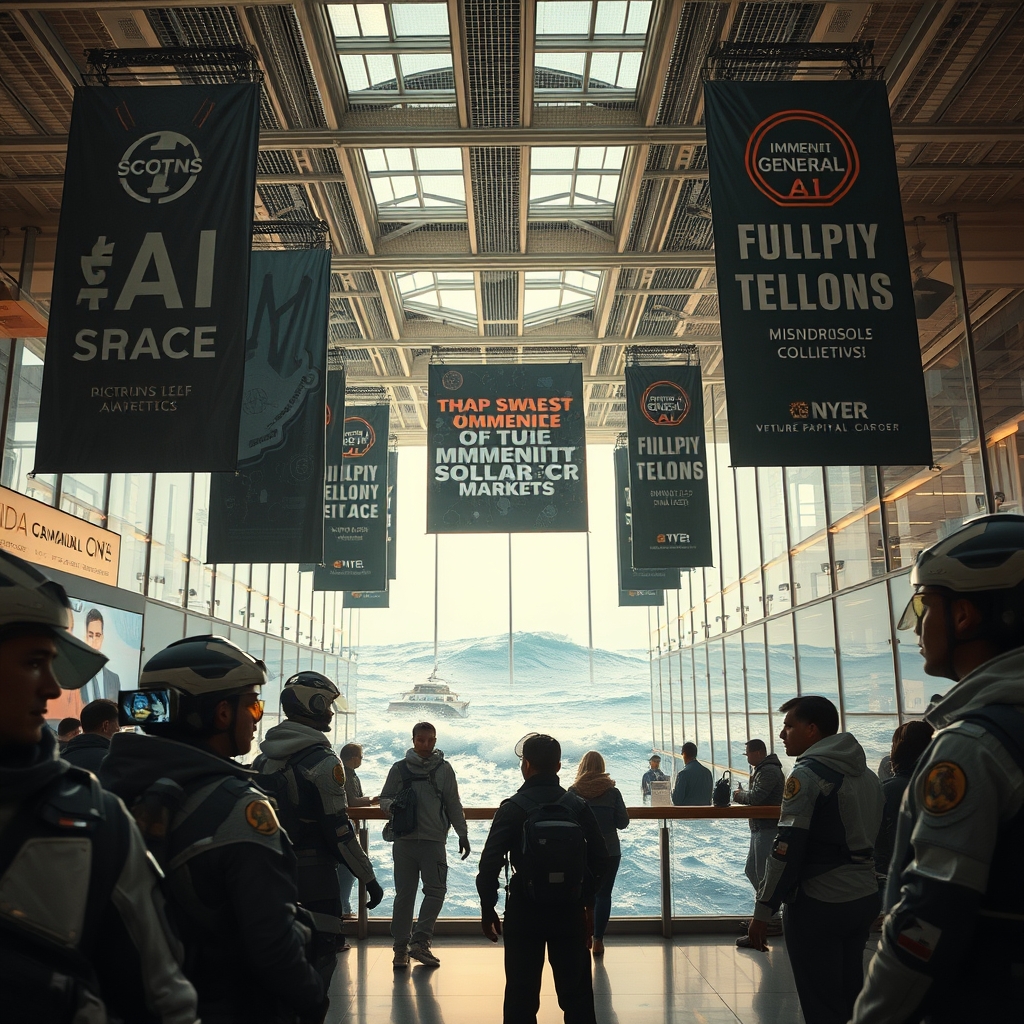
The halo of AI is quickly fading, media headlines are flooded with slogans like ‘Artificial General Intelligence is imminent’ and ‘trillion‑dollar market’, while venture capital pours in like a tide into every project that brands itself as AI. In this feast, programmers see high salaries, stock options, and a sense of mission to change the world, as if merely jumping onto this track would let them ride the fast lane of the era. Yet, when the hype subsides and real product demand remains unfulfilled, this seemingly prosperous sea begins to reveal hidden reefs.
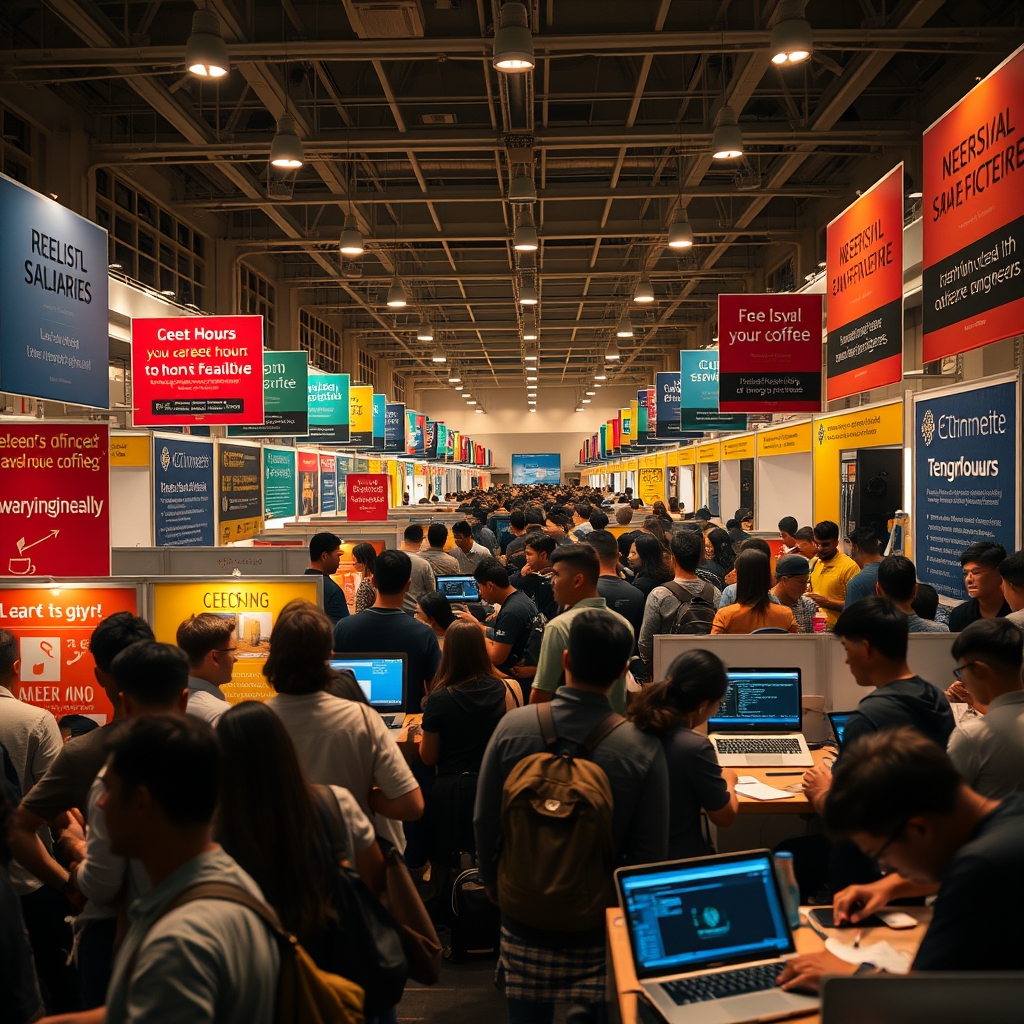
Companies are throwing out dazzling offers at job fairs—annual salaries starting at 300,000 yuan, flexible hours, free coffee and gym access—promising programmers a utopia where financial freedom can be achieved without overtime. Consequently, countless fresh computer‑science graduates and experienced engineers flock to AI positions, pouring huge amounts of time into learning TensorFlow and PyTorch, even slogging through obscure papers, hoping to seize an edge in this technological shift. They treat late‑night lab lights as badges and endless hyper‑parameter tuning as cultivation, yet few pause to ask: where exactly does this road lead?
The bursting of the bubble often happens silently—at first, budgets for some experimental projects are halved, then entire product lines are shut down. Management repeatedly stresses in internal meetings to ‘focus on core business’, and the AI teams once seen as hot commodities suddenly become the primary targets for downsizing. Interns are the first to be let go, followed by mid‑level engineers who have just survived their probation period; their desks feel especially chilly from the air‑conditioning, and their screens still display unfinished model‑training logs.

Take a leading internet giant as an example: its voice‑assistant project was packaged during fundraising as ‘the next‑generation interaction gateway’, attracting nearly a thousand algorithm engineers and data annotators. Yet user retention remained below expectations, and speech‑recognition error rates in noisy environments stayed high; after two rounds of iteration the project was halted, and within a week the team received layoff notices, their resignation letters tinged with regret for the technology and uncertainty about the future. On the other side, a startup that raised funds on AI hype expanded explosively after its B‑round, only to see its capital chain snap because the product never materialized; dozens of programmers were still tweaking parameters for an upcoming demo the day they were let go, ultimately watching their code get shut down on the server.

—— END ——
Yeah, I’ve noticed that too lately. A lot of programmers are being thrown into AI‑driven projects that overpromise and underdeliver, and when the hype cools we’re the first to feel the layoffs or stalled careers. It’s tough, but hopefully it pushes teams to focus on more sustainable, value‑driven work instead of chasing the next buzzword.
Read the article and I felt the same—AI hype is definitely cooling. Around the office, people are talking more about getting real work done with existing models instead of chasing the next flashy demo. The underlying tech isn’t disappearing; it’s just that the bubble’s popping. Thanks for the candid take.
I read the piece and it hits close to home. Over the past few months I’ve seen several teams shift from hiring junior devs to relying more on AI‑assisted coding tools, which does put pressure on entry‑level roles. At the same time, the senior engineers I know are using those same tools to offload boilerplate and focus on architecture, so the impact isn’t uniform. Ha, definitely feeling the squeeze. It’s worth asking whether we’re witnessing a bubble burst or just a painful transition period. Either way, upskilling in AI literacy feels less optional now.
Hey, just read the piece. I’ve noticed more junior devs getting squeezed as companies cut back on experimental AI teams, but the core demand for solid software engineering hasn’t vanished. It feels like a correction rather than a collapse. Curious if others are seeing similar shifts in their teams.
I read the piece and it resonates with what I’ve seen on the ground—many of us feel the squeeze when AI tools get overhyped and management expects instant productivity gains. That said, I’ve also noticed firms starting to offer internal AI literacy workshops, which helps balance the hype with real skill‑building. Overall, a sobering reminder to keep learning fundamentals while we experiment with new tools.
The “junior dev replaced by Copilot” angle is real, but I’m seeing more “senior dev spending 4hrs debugging AI hallucinations” lately. The leverage shifted, didn’t disappear.
Seems like the hype is already translating into real cuts—junior roles are the first to go. Hope companies reinvest in training instead of just slashing heads.
Seems like the AI hype is hitting devs hard—lots of teams cutting back on junior roles while chasing the next big model. Feels like the bubble’s already deflating for those of us in the trenches.
Seems like the AI hype is hitting junior programmers hardest right now. Saw a few friends lose gigs to automated tools this month. Companies should focus on training rather than just cutting heads.
Been saying this since late ’24. My team shrank from 8 to 3, ‘AI productivity’ was the excuse but the ticket queue didn’t shrink, just the headcount. Now we’re debugging generated spaghetti at 2am. The bubble bursting doesn’t feel like a headline, it feels like Tuesday.
The piece nails the current tension—many devs are feeling the pressure as AI tools shift from hype to everyday workflow. It’s a reminder to keep learning fundamentals while adapting.
Been saying this since late ’24. My team got ‘right-sized’ in Q1 — replaced by two seniors + Copilot Enterprise. The irony? We now spend 60% of sprint fixing hallucinated boilerplate the juniors would’ve caught. Management calls it ‘velocity.’ I call it technical debt on steroids. Good read, hits close to home.
Seems like the hype is cooling down; many devs I know are shifting focus to practical AI tools rather than chasing the bubble. Hope companies start valuing real skills over buzzwords.
Read the piece this morning; it resonates with the recent hiring freezes I’ve seen. While AI tools are boosting productivity, the pressure to upskill feels real for many of us.
Seems like the hype is settling; many of us are seeing real project cuts as companies reassess AI ROI. Hope we can shift focus to sustainable engineering rather than chasing buzzwords.
Just finished reading this piece and it hit home—seeing so many dev friends sweating over AI hype while real projects stall feels all too familiar. Hope the industry finds a better balance soon.
Reading this, I feel the AI hype is definitely cooling off. It’s less about programmers being the first victims and more about companies tightening belts after overhiring. Still, seeing friends get laid off sucks.
MikeZ, belt‑tightening bites—hope friends bounce.
Read this while waiting for my build to finish. It’s rough seeing so many talented programmers hit by the AI hype bust — layoffs, project freezes. Hope companies start focusing on sustainable tech rather than chasing the next buzzword.
The article hits a nerve. I’ve noticed more junior devs worried about AI taking over boilerplate coding, yet senior folks are being asked to oversee AI outputs and handle edge cases. It’s a real shift happening now, not some distant scenario.
Read the article, felt a bit uneasy seeing how fast the hype is turning into pressure on dev teams. Hope companies start focusing on sustainable workflows rather than chasing the next AI trend.
After reading this, I’m reminded of how many friends in dev roles are worrying about project cuts as AI tools become mainstream. It’s a reminder to keep learning basics and not rely solely on hype.
Interesting take. I’ve noticed a lot of junior devs getting squeezed as companies cut back on experimental AI projects and focus on core products. The hype definitely outpaced the realistic ROI for many teams.
Thanks, MikeZ. You’ve hit the nail on the head—many teams are trimming speculative AI bets to shore up revenue, leaving junior talent feeling the pinch while realistic ROI catches up.
Read the piece and it resonated with what I’ve seen in my team—several junior devs got moved to AI‑tool maintenance roles while senior folks focus on prompt engineering. The hype definitely created pressure, but I wonder if the shift is more about skill reshuffling than outright job loss. Still, the article raises a good point about needing real‑world grounding beyond the buzz.
Yeah, I’ve seen the hype settle a bit lately. Companies are cutting AI teams after overpromising, and it’s hitting devs hard. Hope things stabilize.
Interesting read. I’ve noticed more junior devs getting squeezed as companies chase AI hype, but the core demand for solid engineering hasn’t disappeared. Would love to see data on how layoffs are actually distributed across skill levels.