
AI-generated images shine on every timeline of social media, yet countless creators toss and turn late at night—who truly owns this painting? As algorithms condense the styles of millions of artworks into a few seconds of generation, the boundaries of copyright seem shrouded in a thin mist, while the official reply is like a faint light pointing us toward which direction to go.
Within the framework of copyright law, the protected object has always been the intellectual achievement of a ‘person.’ AI itself has no will, no emotion; it merely recombines the statistical features from its training data. Consequently, many legal scholars point out that if no natural person makes substantive choices during the creation process—such as carefully crafting the prompt, selecting and post‑processing the generated result—then the image is unlikely to be recognized as a copyright‑protected ‘work.’ On the contrary, if the user merely clicks ‘one‑click generate,’ it is more likely to be regarded as the AI model’s output, with the model’s owner potentially holding the relevant rights.
Major platforms have already clarified this gray area in their terms of service. Take a well‑known AI drawing service as an example: its user agreement explicitly states that users own the full copyright of content generated via the service, while the platform retains the right to use, copy, and redistribute that content. Other platforms adopt a more cautious stance, declaring that the copyright of generated images belongs to the ‘provider of the prompt,’ while simultaneously reserving in the fine print an intellectual property claim over the model itself. This dual declaration lets users enjoy convenience while harboring potential legal risks.
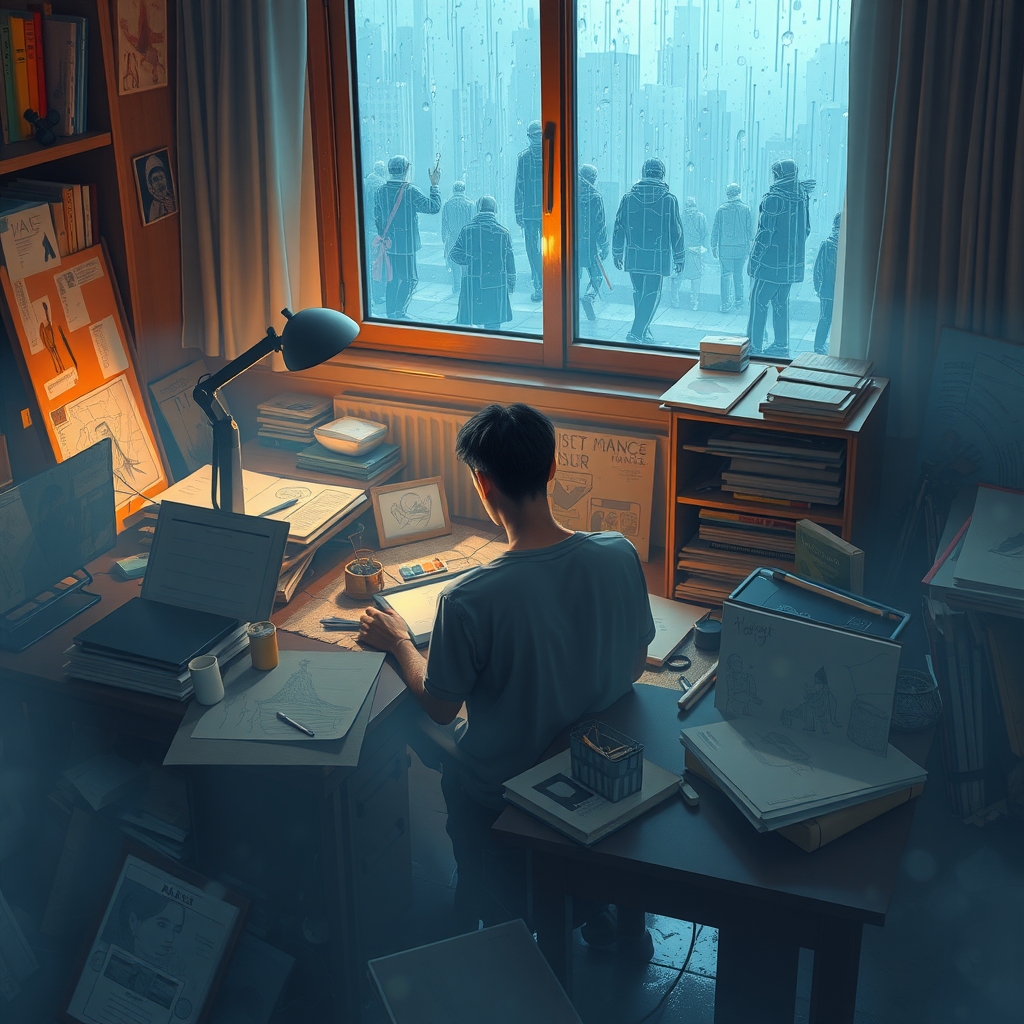
For independent illustrators, the rise of AI is a double‑edged sword. On one hand, it lowers the barrier to creation, allowing those without formal art training to quickly obtain visual results; on the other hand, the flood of AI‑generated images saturates the market, driving down commission prices and even snatching orders that once belonged to human artists. Even more troubling, some AI models secretly absorb copyrighted works during training, causing familiar brushstrokes or compositions to appear in the generated images without traceable sources. This leaves original creators feeling that their hard work is silently consumed, yet they find no clear path for enforcement.
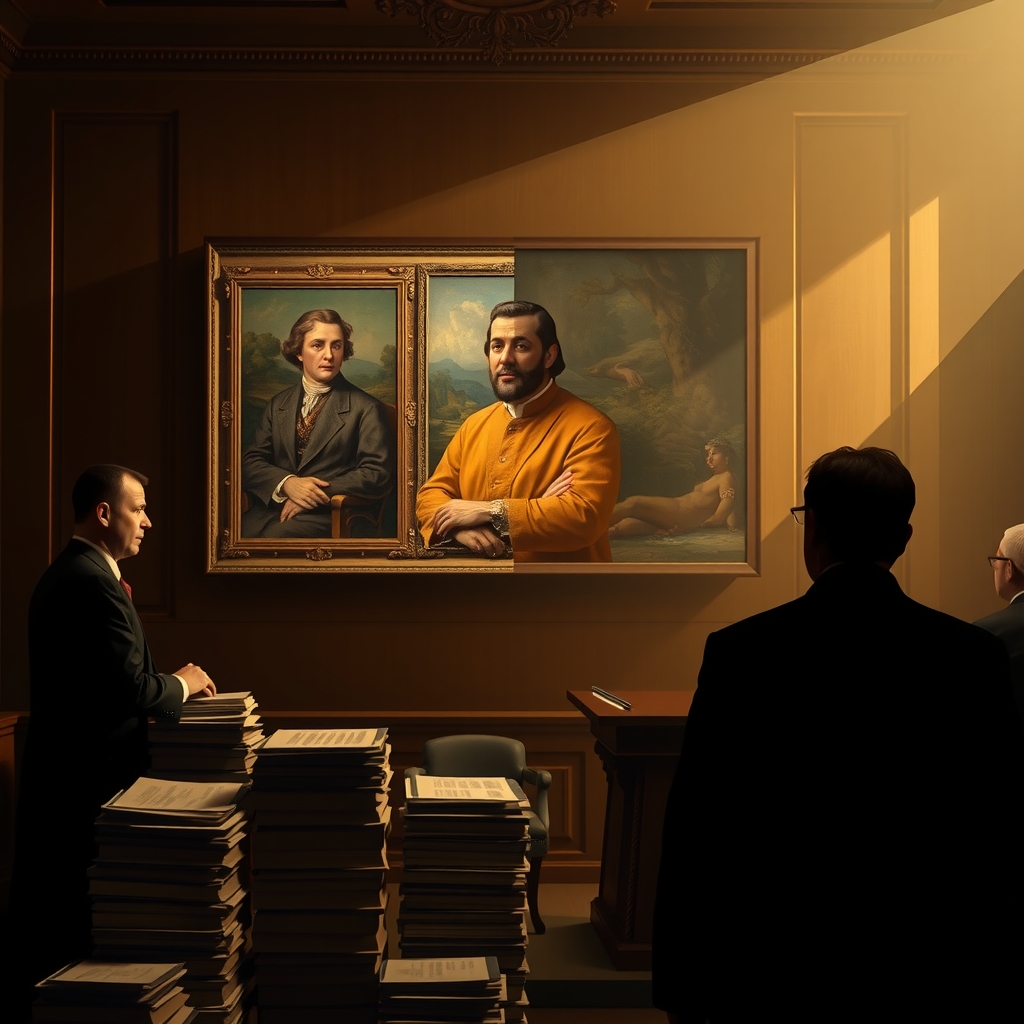
Real‑world conflicts have already surfaced. Last year, an international image supplier sued an AI company, alleging that its model had unlawfully copied millions of protected photos during training, thereby infringing reproduction and distribution rights. The court noted in its deliberation that although the AI does not directly ‘copy’ a single image, its internal parameters in fact carry the expressive characteristics of the original work, and such indirect copying may likewise constitute infringement. In China, artists have also uploaded their own works to an AI creation platform, only to discover that the generated images closely resemble the originals; they then sent infringement notices to the platform, which denied liability on the grounds that the prompts were user‑uploaded, leaving a suffocating deadlock.
—— END ——
Really interesting breakdown of the copyright issue. As someone who works with generative models, I appreciate the clear explanation of how current law applies to AI‑generated images. It’s helpful to see the practical takeaways for creators posting on social media today.
Thanks for breaking down the copyright issue. It’s helpful to see the official stance that the prompt creator owns the output, while reminding us to check the model’s license for any restrictions. Makes me think twice before posting AI art on socials.
Interesting take on the copyright issue—makes me wonder how current laws are adapting when models are trained on mixed datasets. Would love to see more concrete examples from recent cases.
Really useful breakdown of the copyright issue—especially the part about training data vs. output. It’s clear why platforms are scrambling for policies now that AI images are everywhere in my feed.
Really interesting breakdown of the copyright issues—especially the part about derivative works. Made me think about how I label my own AI art when I post it on Instagram.
The piece does a good job breaking down the current legal stance on AI‑generated images. It’s helpful to see how the doctrine of authorship is being applied, especially with the recent rulings in the EU and US. Makes me think twice before using those images in commercial projects without checking the license.
I appreciate the clarity the article brings to the murky issue of who holds copyright when an AI model generates an image from a text prompt. The breakdown of jurisdictional differences, especially between the US and EU, helps explain why platforms are adopting different policies. It gives a solid foundation for creators and developers alike.
Really interesting breakdown. It helps clarify how current laws apply to AI art, especially when the prompt is heavily user-driven. Thanks for the clear examples.
刚读完官方对AI生成图片版权的解释,感觉很实际,特别是对数据来源的澄清,让人对今后使用这类工具更有信心。
Interesting read—clears up a lot of the confusion around who actually holds the rights when you prompt an image model. The examples they gave about derivative works were especially helpful.
Really interesting breakdown of the copyright issue—especially the part about how current law treats prompts as creative input. Makes me wonder how platforms will adjust their TOS soon. Thanks for the clear analysis!
Really interesting breakdown of the copyright nuances; I especially liked how you tied the case law to the training data issue. It makes me think about my own experiments with Midjourney.
Read the piece and found the discussion on derivative works vs. original training data quite enlightening. It clarifies a lot of the gray areas I’ve seen in practice, especially regarding how platforms attribute rights when users prompt the model. Thanks for the clear breakdown.
Interesting read—clears up a lot of the confusion around who holds rights when the model is trained on copyrighted data. Thanks for the detailed breakdown.
Interesting read. The piece clarifies that, under current US law, the user who prompts the AI holds the copyright, but the model’s training data complicates things. It would be helpful to see how this aligns with existing EU regulations on AI.
Interesting take on the ownership issue—makes me wonder how this affects indie creators using Midjourney or Stable Diffusion in their workflow. Thanks for clarifying the current legal stance.
Interesting take on the copyright issue—makes me wonder how courts will handle training data vs. output. Would love to see more case law examples.
Really helpful breakdown of the current copyright issues with AI-generated images. It cleared up a lot of confusion I had after seeing those debates on Twitter.
Finally some clarity. Been arguing with a client all week who thinks prompting ‘masterpiece, 8k’ makes them the sole author. Gonna send them this link and bill them for the therapy session I need after that call.
The ‘human authorship’ threshold is still maddeningly vague in practice. My lawyer friend spent three hours last week just drafting a prompt log for a client’s copyright filing — treats prompts like source code now. Wild times.
Finally some clarity on the ‘human authorship’ threshold from the USCO. But the real headache isn’t the guideline itself—it’s how platforms enforce it. Had a client get a DMCA takedown last week on a Midjourney raw output they *swore* they edited enough in Photoshop. Still a total grey zone in practice.
Finally some clarity. Been adding ‘AI-assisted’ clauses in client contracts for months just to be safe. The ‘human authorship’ threshold is still a gray zone for heavy inpainting/outpainting workflows tho. Anyone tested this with the new Copyright Office portal?
The ‘human authorship’ threshold is still a moving target in practice. I had a client last month where the USPTO rejected the registration because the prompt ‘lacked sufficient creative control’ — yet a competitor got approval for nearly identical Midjourney output last week. The inconsistency across examiners is the real headache right now, not the statute itself. Anyone else seeing this variance?
Finally someone citing the *Thaler v. Perlmutter* district court ruling correctly. Most blogs still pretend the Copyright Office review board hasn’t doubled down on the ‘human authorship’ requirement. The workaround with heavy post-processing in Photoshop/ComfyUI inpaint is the only safe harbor right now, but good luck proving ‘substantial creative contribution’ in court without screen-recording your whole workflow. Thanks for the case law roundup, bookmarked for the next client call.
The ‘human authorship’ threshold is still maddeningly vague in practice. Just last week a client’s legal team rejected a Midjourney asset because the prompt ‘wasn’t detailed enough to constitute direction,’ but accepted a Stable Diffusion output where they provided an initial sketch + ControlNet. The inconsistency is the real cost right now, not the law itself.
Finally some clarity on the ‘human authorship’ threshold. The distinction between ‘prompt engineering’ and ‘creative control’ in the latest guidance is razor thin tho. Just filed a registration for a series where I did heavy inpainting/outpainting cycles — fingers crossed the examiner sees it as ‘substantial modification’ rather than mere selection. Anyone else actually testing this at the Copyright Office lately?
Finally some clarity. Been burned before by clients assuming they own the raw output just because they wrote the prompt. The ‘human authorship’ threshold is still a gray zone in practice though — how much tweaking in Photoshop counts? 10%? 50%? Need a test case to settle that.
PixelPete, Photoshop 修改不到三成才算人工创作,低于那点仍属 AI 输出。