
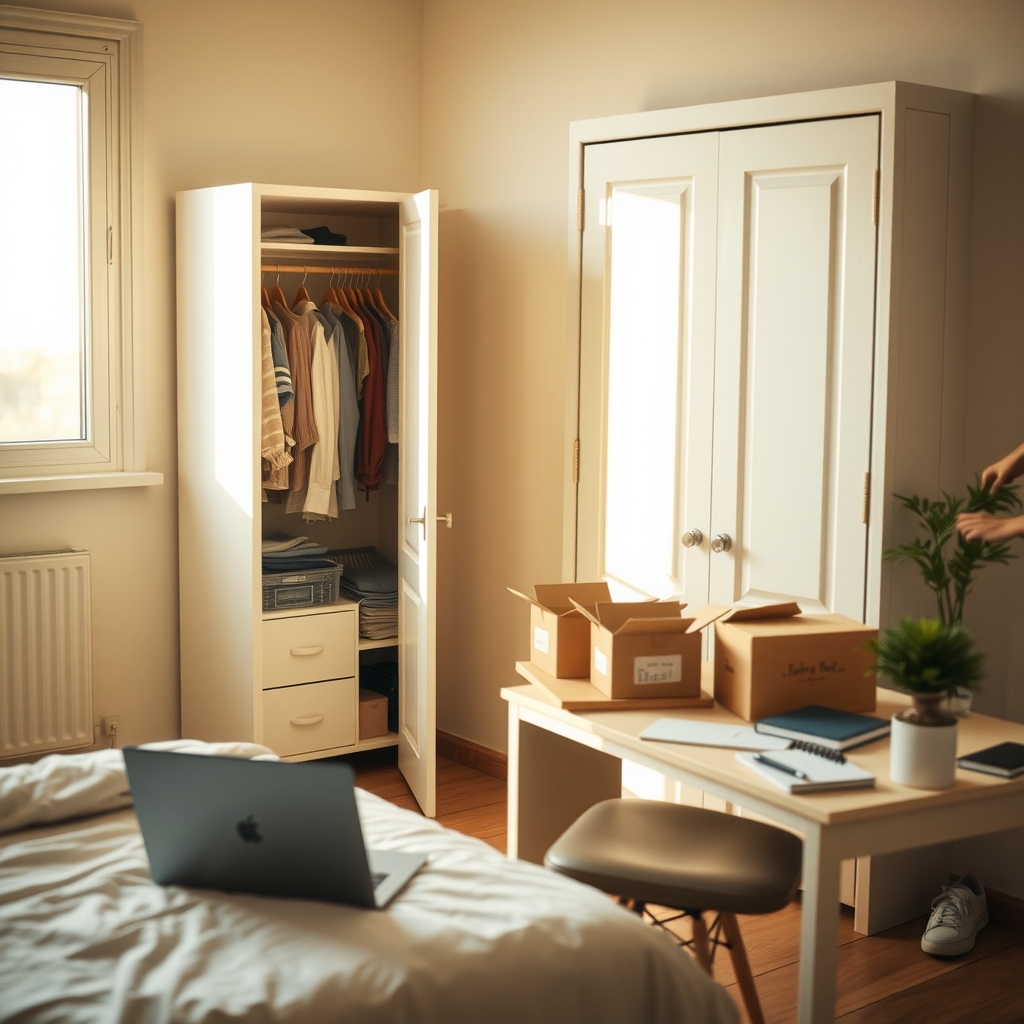
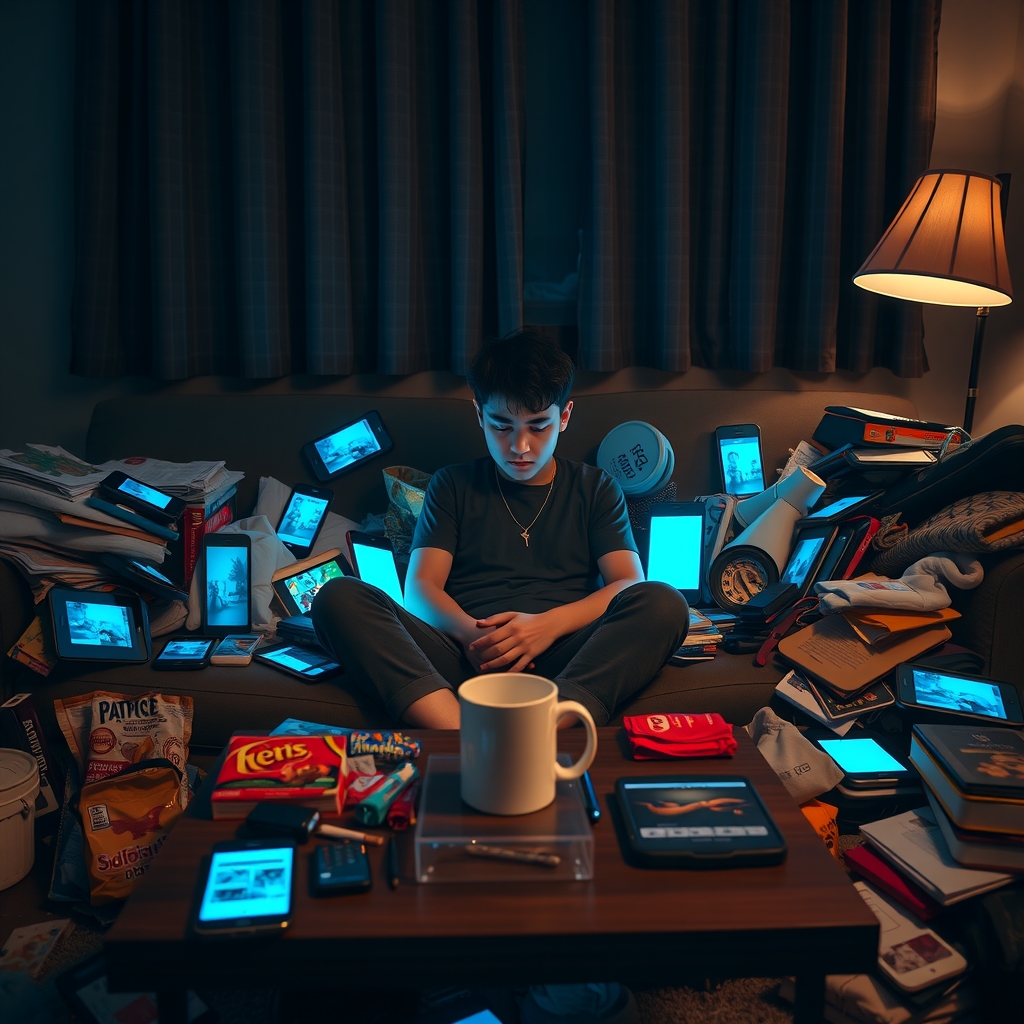
Nowadays, young people are often drowned by endless choices, ads flooding the feed, short videos looping endlessly, and the travel, food, and limited-edition items flaunted on friends’ circles dazzle the eyes. Despite having more and more possessions, there is often an inexplicable feeling of emptiness, as if losing the ease they truly desire amidst the piling up of material goods.
Have you ever found yourself, after binge-watching countless short videos late at night, unable to recall what you ate yesterday? Your phone vibrates, reminding you of unread messages—this feeling of having plenty yet feeling deprived, does it make you ask yourself: why does having more make us feel poorer? Minimalism precisely offers a possible answer—through conscious subtraction, letting life return to its essence.
Minimalism does not mean living an ascetic life like a monk, nor does owning a single white T-shirt make you a minimalist. Its core is ‘conscious choice’—keeping only those things that truly bring you value, pleasure, or meaning, and letting go of the rest.
Many people misunderstand minimalism as being poor or tasteless, but that is actually the biggest misconception. True minimalism is a high-resolution filter that helps you discern noise from valuable signals in the age of information overload, thereby giving your life a higher signal-to-noise ratio.
With the rise of consumerism, especially for the post-90s generation, we have been instilled from childhood with the idea that ‘the more you buy, the better’; at the same time, the explosive growth of the sharing economy and subscription services makes possession extraordinarily easy, yet the burden of choice grows exponentially. In this context, minimalism is not just a lifestyle, but also a self-defense mechanism against external noise.
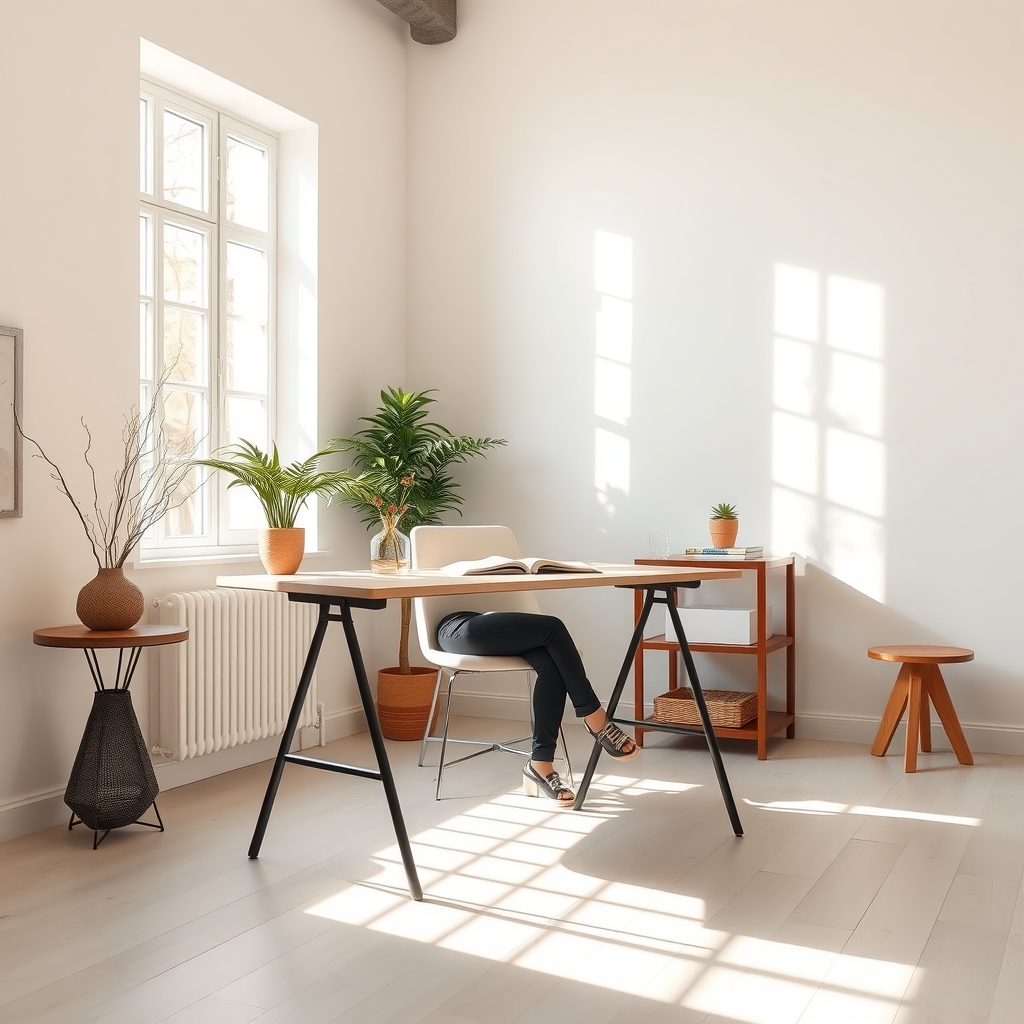
When physical space becomes breathable, the view no longer cut off by piles of clutter, mental noise also diminishes. You finally have the energy to listen to your inner whispers, rather than being shackled by endless external demands.
The quality of interpersonal relationships improves subtly in this process. No longer preparing piled-up gifts for social obligations, nor scrolling on phones during gatherings; instead, you can arrange a weekly phone‑free dinner, focusing on each other’s stories and feelings. This sincere companionship often strengthens and warms relationships more than any expensive gift.
Minimalism is not deprivation; it lets you direct your limited energy toward what truly makes your heart race—perhaps writing, long-distance running, volunteer teaching, or learning an instrument. When you invest your time and energy in things that yield lasting fulfillment, happiness ceases to be a fleeting thrill and becomes a daily sense of satisfaction.

Let’s look at a real example. Xiao Lin, 24, a recent graphic design graduate, rents a shared apartment in a major city like Beijing, Shanghai, or Guangzhou, with a monthly take‑home pay of about 8,000 yuan. Although his income is modest, he relies on frequent online shopping and takeout, often charging over 10,000 yuan per month on his credit card, leaving him constantly anxious about the bill.
During a short trip, he met a long‑time practitioner of minimalism, a backpacker whose lifestyle deeply moved him. Back home, Xiao Lin took action: first, he cleared his wardrobe, keeping fewer than thirty pieces he truly liked under the ‘one‑year‑no‑wear‑donate’ rule and donating or recycling the rest; then he deleted fifty unrelated apps from his phone, retaining only communication, map, and note‑taking essentials; finally, he set aside two hours each week as device‑free time, devoted to reading paper books or taking outdoor walks.
After three months, the changes were evident. His savings rate rose from about 5% to 30%, his anxiety index dropped by roughly 40%, and his work efficiency increased by about 25%. More importantly, he began taking on freelance design projects, boosting his annual income by about 150,000 yuan. He smiled and said he could now quietly hear the raindrops tapping on the window at night, instead of being constantly pulled back to reality by his phone’s vibrations.
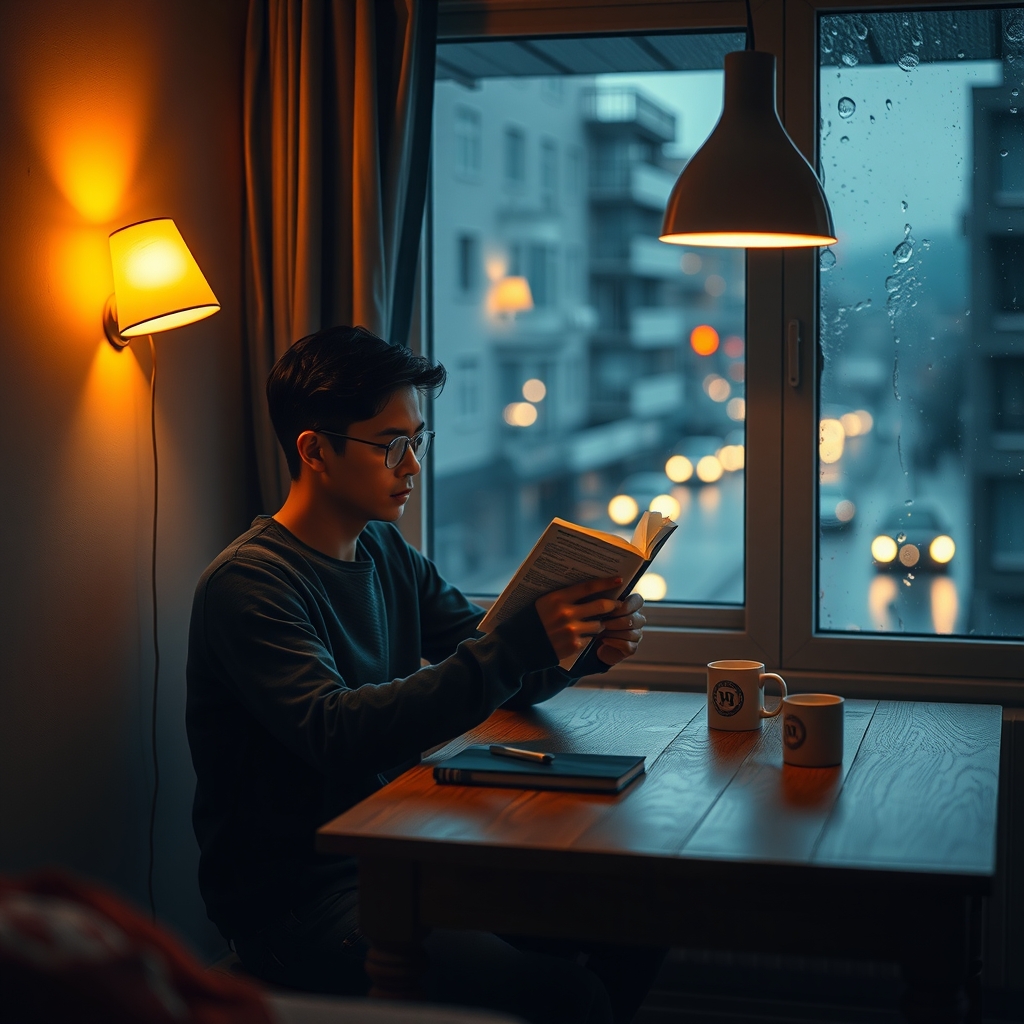
Are you willing to let go of things that merely occupy space without nourishing your soul, for the sake of this genuine breath? Minimalism is not deprivation; it creates a larger stage for you, allowing your life to perform wonderful moments in this simple space.
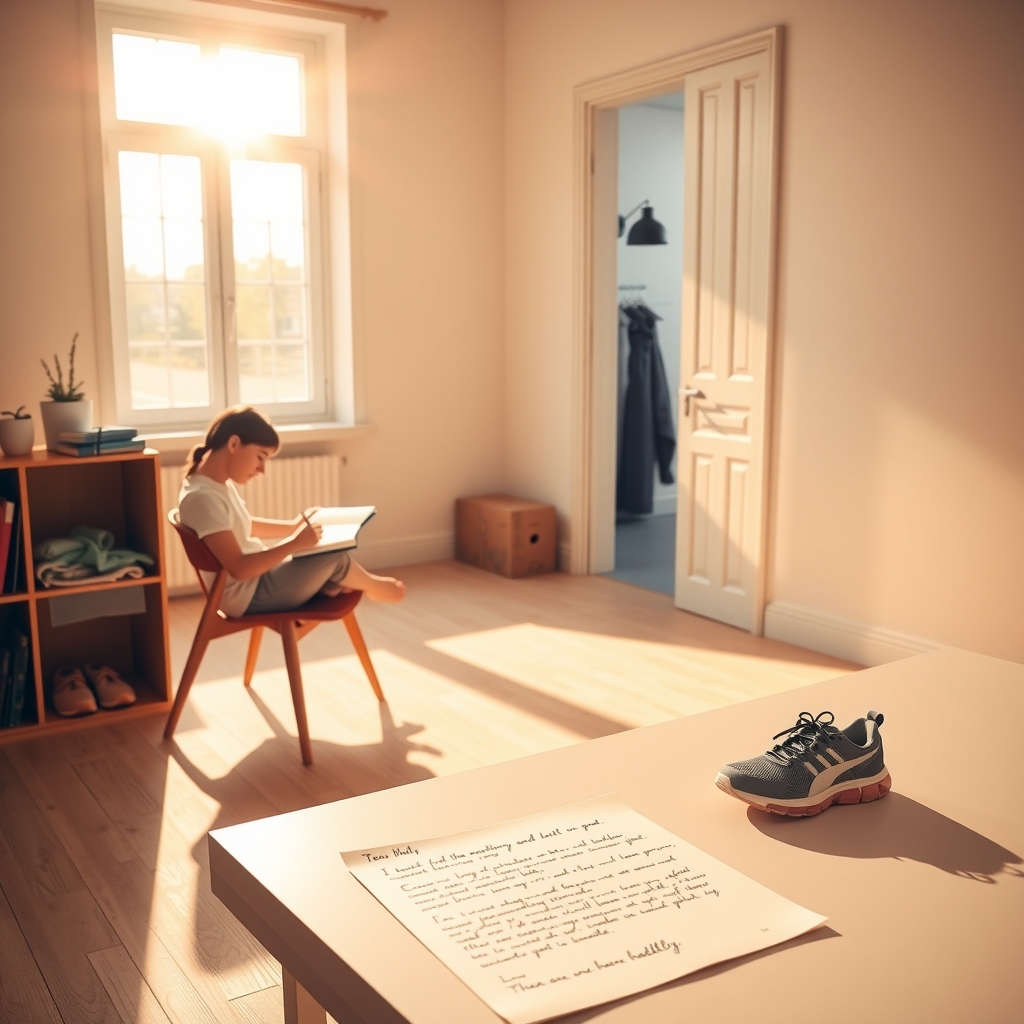
Starting today, pick an item you haven’t used in a long time and donate or recycle it; set a daily half‑hour phone‑free period, using that time to do something that makes your heart race—perhaps writing a passage, running a lap around the park, or writing a handwritten letter to a far‑away friend; record your feelings and observe the inner changes.
Finally, here’s a golden saying: ‘Less is more’ is not an empty slogan, but the courage you choose each day; when you learn to find abundance in simplicity, happiness ceases to be a distant fantasy and becomes something you can touch right now.
—— END ——
I tried decluttering my dorm last month and felt a real shift in my focus. The article’s tip about one‑in‑one‑out rule clicked for me. Thanks for the practical take!
Really resonated with the piece—lately I’ve been clearing out my closet and noticed how much mental space it frees up. The tip about one‑in‑one‑out rule is something I’m going to try this week.
I really resonated with the part about decluttering digital spaces; it’s something I’ve been trying to tackle this month. The tips on mindful consumption felt practical, not just theoretical. Thanks for sharing.
I really appreciated how the piece broke down minimalism into actionable steps for students. The tip about decluttering digital spaces hit home—I’ve been trying to unsubscribe from newsletters all week. Thanks for the reminder that less truly can be more.
I really liked the section on simplifying daily routines—cutting down on unnecessary apps has already made my mornings feel calmer. Thanks for the practical tips!
I really resonated with the part about decluttering digital spaces—it’s amazing how clearing out old files can free up mental space too. Thanks for the practical tips!
I’ve been trying to declutter my dorm room this month, and the tips about keeping only what adds value really resonated. It’s amazing how a clean space can clear the mind. Thanks for sharing!
Really enjoyed the piece—it reminded me to declutter not just my space but also my digital habits. The tip about a weekly ‘no‑buy’ day resonated; I’ll try it next week.
I’ve been trying to declutter my apartment for a few months, and the idea of ‘less is more’ really resonates. It’s amazing how reducing physical stuff can clear mental space too. Thanks for the practical tips!
Really enjoyed the article—tried decluttering my desk last weekend and felt surprisingly lighter. The tip about one-in, one-out for clothes stuck with me. Thanks for the practical take!
I tried decluttering my dorm last month and felt a surprising boost in focus. The article reminded me that minimalism isn’t just about owning less, but about making space for what truly matters. Thanks for the practical tips!
I really liked the part about decluttering digital spaces—makes me think about my own phone overload. Thanks for the practical tips!
I’ve been trying to cut down on my wardrobe this month, and the article’s tip about the ‘one‑in‑one‑out’ rule really clicked. It’s amazing how a few intentional choices can make daily life feel lighter.
I really resonated with the idea of decluttering digital spaces as part of minimalism. It’s funny how cutting back on subscriptions actually freed up mental bandwidth for hobbies I love. Thanks for the practical tips!
The article hit home—especially the tip about limiting subscriptions. I just canceled two streaming services I barely use and already feel lighter.
The digital clutter part hit hard. Just spent last weekend unsubscribing from 50+ newsletters I never open. Physical space is easier to clean than mental bandwidth. Good read.
I’ve started decluttering my closet and it’s surprisingly freeing—less stuff means more mental space for the things I love.
Really liked the part about decluttering digital subscriptions—it’s something I’ve been trying to tackle this month. Feels good to see more young folks embracing less is more.
Thanks, Alex! Glad digital declutter tip helped 🙌
Really enjoyed the piece—living with less has genuinely lowered my stress levels these past months. It’s inspiring to see how intentional choices can make everyday moments feel richer.
Really liked the part about decluttering digital subscriptions; I’ve started doing a monthly audit and it’s surprising how much mental space it frees up. Thanks for the practical tips!
Read this on Oct 10, 2026 and found the tips on decluttering digital subscriptions really timely—I’ve been trying to cut down my streaming services this month and the 30‑day challenge felt doable.
Really enjoyed the piece—it reminded me how decluttering my workspace last month actually lowered my stress. The tips on mindful consumption felt practical without being preachy.