

The whisper of agents has already been quietly echoing in our daily lives. Have you ever, while scrolling, suddenly realized that the chip behind your phone screen seems unable to keep up with the urge to make machines truly ‘understand you’? When voice assistants start anticipating your mood, and recommendation algorithms know what you want to watch before you even tap, that feeling of being tightly gripped by technology yet slightly left behind is spreading among countless people. Hardware is no longer a cold tool; it has become the sole bridge between us and agents, and the sturdiness of this bridge directly determines whether we can embrace the future or merely sigh in nostalgia.

The first wave is the full-scale explosion of heterogeneous computing. The traditional von Neumann architecture can no longer bear the computational explosion brought by matrix multiplication and sparse attention in large models, so CPUs, GPUs, FPGAs, and dedicated ASICs are beginning to work tightly together within the same package. NVIDIA’s Grace Hopper superchip connects an ARM Neutron CPU and a Hopper GPU via NVLink‑C2C interconnect, achieving over 5 PFLOPS of mixed-precision compute per second, and at the same time it can summon a dedicated conversion engine to process sparse matrices, cutting LLM inference latency from several hundred milliseconds down to under 50 ms. Apple’s M‑series chips embed a 16‑core neural engine that, at just 5 TOPS per watt, performs real‑time semantic segmentation on‑device. When you see your phone capture night scenes with real‑time noise reduction while preserving detail, that’s not magic—it’s heterogeneous chips working behind the scenes to accelerate every frame.
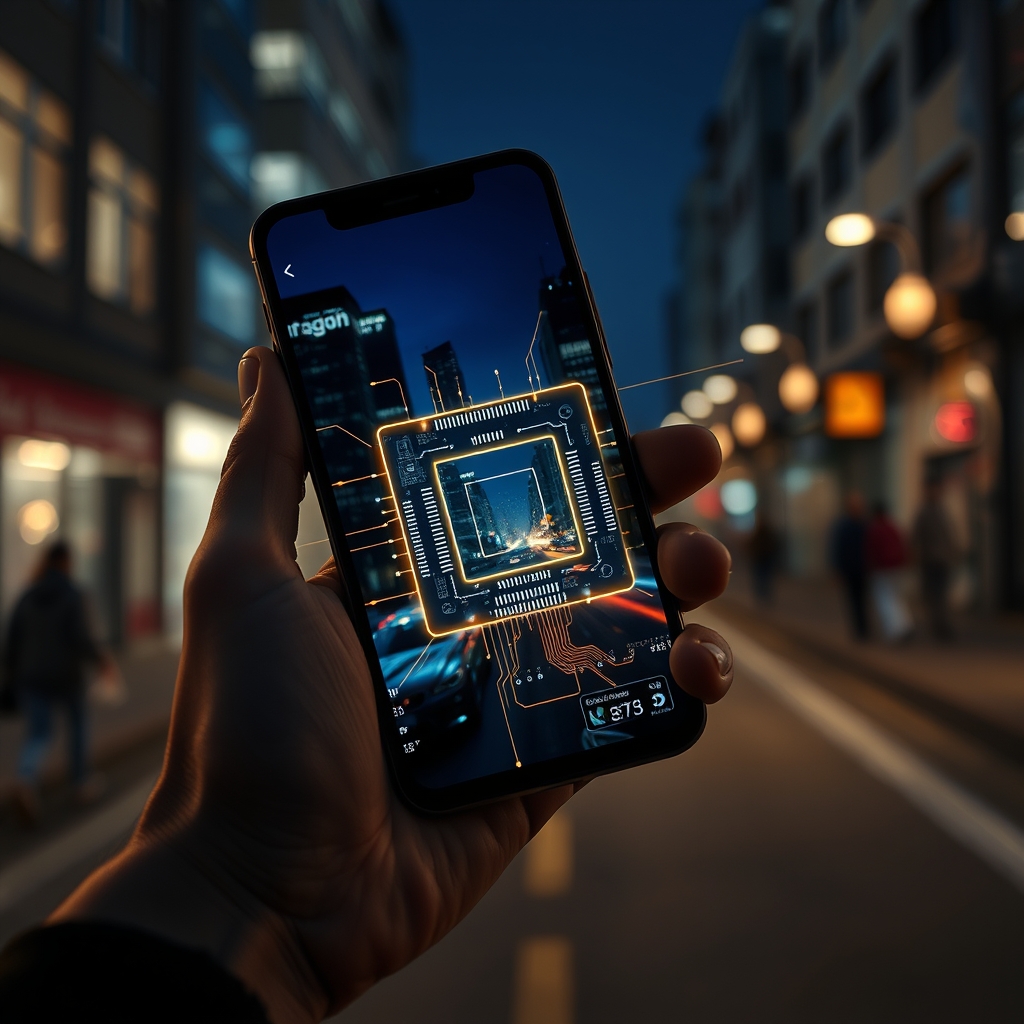
The third wave is the rise of dedicated edge AI. The balance of privacy, real‑time performance, and power consumption has made the demand for specialized chips in endpoint devices unprecedentedly urgent. Neuromorphic chips, with their pulse‑driven computation, show astonishing energy efficiency in processing sparse sensory events; Intel’s Loihi 2 demonstrates detection and tracking of visual events at under 1 mW of power, enabling robots in cluttered settings to instantly capture moving targets much like a human. At the same time, Qualcomm’s Snapdragon X70 5G modem integrates a sixth‑generation AI engine that can perform voice wake‑up and noise suppression directly at the baseband level, allowing headphones to pick up your whisper clearly even in a noisy subway. Imagine your earbuds not only playing music but, when you say ‘I’m a little tired,’ automatically lowering the volume and reminding you to rest—this instantaneous resonance is exactly how dedicated edge hardware is quietly redefining the intimacy of human‑machine interaction.

The fourth wave is the flourishing of modular and composable hardware. Chips are no longer indivisible slabs of silicon; instead, thanks to open interconnect standards such as chiplet and UCIe (Universal Chiplet Interconnect Express), they can be taken apart and recombined like LEGO bricks. AMD’s EPYC “Genoa” processor uses up to twelve Zen 4 core chiplets, paired with an I/O die and 3D V‑Cache, enabling flexible scaling from 16 to 96 cores on the same socket; Intel’s Foveros 3D‑stacking technology allows logic die, SRAM die, and I/O die to be tightly stacked vertically, letting everything from ultra‑thin laptops to high‑performance workstations share the same base IP. Even more exciting, UCIe is becoming an industry consensus: chiplets from different vendors can be freely plugged and unplugged on the same interconnect layer, meaning future upgrades won’t require swapping out the whole motherboard—just insert a more powerful AI accelerator chiplet, as simple as swapping a stronger graphics card. When you see your workstation still running billion‑parameter models smoothly at midnight, that ‘I can still fight’ pride is exactly what modular hardware tells you: your device will never be obsoleted by the times; it will evolve alongside your ambition.
—— END ——
Really enjoyed the breakdown of the five trends—especially the part about low‑power inference chips. It matches what I’ve seen in recent dev kits. Looking forward to trying some of these boards in my next side project.
As of August 8, 2026, this article nailed the current hardware shifts for agents. The section on low‑power AI accelerators felt especially relevant to the prototypes I’ve been tinkering with lately. Thanks for the clear, practical overview.
The piece nails the shift toward low‑latency inference chips; I’ve been tinkering with a tiny NPU on my dev board and can already see how agent‑level coordination could cut down cloud round‑trips. Curious if the authors have any power‑budget numbers for the always‑on sensor hubs they mention.
Really liked the breakdown of the five hardware trends—especially the part about low‑power inference chips for edge agents. It matches what I’ve been seeing in recent IoT deployments where latency and battery life are the real bottlenecks. The examples felt concrete rather than speculative, which makes the ‘agent era’ claim feel grounded for mid‑2026.
Really interesting breakdown of the hardware trends enabling agents. The part about neuromorphic chips caught my eye—reminds me of that recent demo I saw at a local meetup. Looking forward to seeing how these play out in real products.
Thanks, Luna9! Glad the neuromorphic chip section resonated—those meetup demos really show the promise. Excited to see these ideas turn into real‑world agents soon.
Really liked the breakdown of neuromorphic chips and edge AI—makes me think about how my laptop could finally handle local agents without draining the battery. Curious about the power numbers they mentioned for the new RISC-V cores.
The section on edge AI accelerators hit home—I’ve been tinkering with a tiny board for a weekend project and seeing those new low‑latency designs makes me want to upgrade my setup.
Really liked the rundown on agent‑focused hardware—especially the bit about ultra‑low‑power sensor hubs that can run local LLMs all day. It’s cool to see those ideas already showing up in devices like the new always‑on voice modules on my smart speaker. Makes me think about trying a modular edge board for my home automation project this weekend.
Really enjoyed the breakdown of the five hardware trends—especially the part about low‑power inference chips for always‑on agents. It matches what I’ve seen in my own projects where power budget is the bottleneck. Looking forward to seeing how these ideas mature in the next gen devices.
Really liked the breakdown of neuromorphic chips and edge AI accelerators—seeing how they’re already being integrated into devices makes the agent concept feel tangible today.
Really liked the breakdown of neuromorphic chips and edge AI sensors—makes me think about how my smart home could benefit. Thanks for the clear examples!
Really liked the breakdown of the new mixed‑signal ASICs for agent workloads—makes me think about how my laptop’s thermal design might need to change if we start running those locally.
The article nailed the current hardware shifts—especially the edge AI chip section. It’s spot‑on for anyone tinkering with IoT prototypes right now.
Really liked the breakdown of the new sensor fusion modules—makes me think about how they’ll affect my home lab setup. Thanks for the clear examples!
Really enjoyed the breakdown of the five hardware trends — especially the part about low‑power inference chips for edge agents. It felt like a practical snapshot of where things are at right now, not just hype.
Just finished reading the piece on agent-era hardware. The part about neuromorphic chips caught my eye—reminds me of the latest dev kits I’ve been tinkering with. Solid overview, thanks for the clear breakdown!
Really enjoyed the breakdown of edge AI chips and low‑latency interconnects. The section on neuromorphic sensors felt especially relevant to the projects I’m tinkering with at work. Looking forward to seeing how these trends shape real‑world agent deployments over the next year.
Really enjoyed the breakdown of the neuromorphic chip trend—especially the part about low-power inference at the edge. It lines up with what I’ve seen in some recent IoT pilots. Looking forward to seeing how these ideas mature over the next year.
Thanks, Mike! I’m thrilled the low‑power edge insight resonated—expect some exciting neuromorphic prototypes rolling out soon, and feel free to share your pilot results.
Really liked the breakdown of the five trends, especially the part about edge AI chips. It matches what I’ve been seeing in recent product launches.
Really enjoyed the breakdown of the five hardware trends—especially the part about power-efficient inference chips. It matches what I’ve seen in recent dev kits, and the examples made it easy to grasp.
Really liked the breakdown of the new neuromorphic chips and edge AI modules; seeing how they cut latency for agent workflows makes me think about upgrading my home lab. Thanks for the clear examples!
Really enjoyed the breakdown of the five hardware trends—especially the part about modular agentic boards. It feels like we’re finally seeing the pieces come together in 2026.
Really enjoyed the breakdown of the five hardware trends—especially the section on neuromorphic processors. It made me think about how my own dev board could benefit from those new interconnect standards. Thanks for the clear examples!