

As rents and prices rise in tandem, wages feel like a stuck gear; many young people start draining their savings by month‑end just to barely make ends meet. This recurring tension breeds an inexplicable fear of the future, as if every expense is draining their sense of security.
But when income gains a relative sense of certainty—even if it’s just a stable base salary plus foreseeable subsidies—people can psychologically loosen their clenched fists and start planning the next trip, course of study, or savings. A steady cash flow is more than a number on a ledger; it is the confidence that one can control their future.
Xiao Zhang, an internet operations worker in Guangzhou, saw his fixed monthly income rise by 3,000 yuan after moving to a platform company that offers basic guarantees. Where he once could afford only one take‑out meal a week, he now arranges two short family outings each month, and his happiness index has climbed nearly ten points in six months.

Medical expenses have long been an invisible blade hanging over urban families, especially when confronting parents’ chronic illness or an unexpected hospitalization—a single bill can wipe out savings in an instant. This worry keeps many people overly cautious in everyday spending, to the point of hesitating to buy themselves a piece of clothing they truly like.
But as social security coverage expands and major‑illness mutual‑aid mechanisms improve, people no longer need to hold their breath before every doctor’s visit; instead they can devote more energy to companionship and experiences. The presence of a safety net spreads risk from individual shoulders to society as a whole.
Li Na, a 45‑year‑old full‑time mother in Chengdu, saw her mother diagnosed with hypertension; through urban employee basic medical insurance she was reimbursed for 70% of the drug costs, with the remainder shared by the major‑illness relief fund. Thereafter she no longer cut the family travel budget out of drug‑cost worries, and within a year the family completed three short scenic trips, markedly boosting their life satisfaction.

In a city of towering skyscrapers, loneliness often creeps in alongside the glow of overtime work. People may rack up countless likes on social media, yet when they truly need to confide, they find only cold automated replies on their phones. This superficial connection ends up deepening the inner void.
At this point, community interest groups, mental‑health hotlines, and regular offline gatherings act like a series of warm lighthouses, guiding lost souls back to a sense of belonging. Participants discover that a simple shared interest can instantly bridge the gap between them, and laughter begins to echo in their ears.
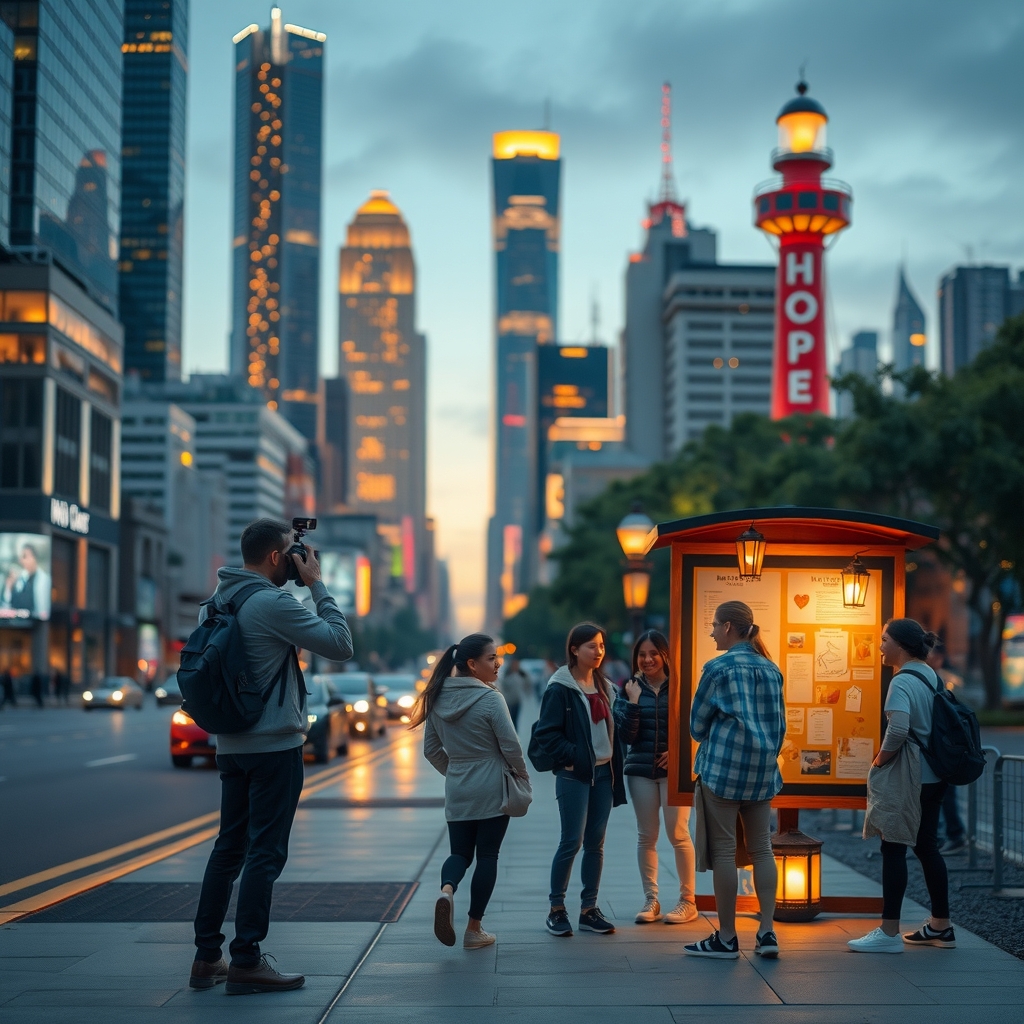
Shenzhen software engineer Wang Lei, after three consecutive months of anxiety symptoms, joined his company‑organized weekend photography club, regularly shooting street life to capture light and shadow. His self‑rated depression score dropped from 18 to 7, and laughter began to appear more frequently in his life.
Air quality and noise levels are often invisible variables that shape urban residents’ moods. On smoggy days people must shut their windows and rely on air purifiers; traffic noise on the streets makes conversation difficult and can even impair sleep depth.
When the government intensifies efforts to promote greenery, build parks, and implement low‑emission zones, trees along the streets gradually flourish and the annual average PM2.5 concentration drops by nearly 30%. The increase in green space not only improves visual perception but also provides places where people can breathe fresh air.
After the wetland park in Beijing’s Chaoyang district was completed, resident Sun Haoyu takes his dog for a morning jog there every day. He told reporters that since the green space appeared, his anxiety index has fallen by nearly a quarter and his mood has become noticeably calmer.

—— END ——
Interesting read. I’ve noticed how rent hikes in my city are squeezing disposable income, making it harder to feel content despite steady wages. The article’s focus on social trust and leisure time resonates—those small things often matter more than a bigger paycheck.
The article hits close to home. With rent jumping 12% this year in Shanghai, I’ve cut back on dining out and found that small joys—like a weekend walk in the park or a home‑cooked meal—boost my mood more than any shopping spree. It would be great to see more data on how community activities affect happiness across different income brackets.
I found the discussion on how rising housing costs affect happiness really relatable—especially after seeing my own rent jump this month in Shanghai. The suggestion about community spaces resonates.
Interesting read—seeing how rising rents squeeze disposable income really hits home for many urban workers. The data on leisure spending was especially eye‑opening.
Really resonated with the point about balancing cost-of-living pressures with small joys—like how a weekly coffee treat can boost mood despite rent hikes. Thanks for the practical tips!
Really resonates with the bit about rent and price hikes outpacing wage growth. I’ve felt that squeeze myself living in Shanghai—small joys like a good coffee or a walk in the park matter more than ever. The article’s focus on community and mental‑health nudges feels like a practical start.
The article hits on something I’ve felt lately—when rent keeps climbing, even a small raise feels meaningless. I liked how it tied mental well‑being to affordable leisure options like community parks and cheap street food. It reminded me to look for joy in the little things that don’t cost much.
The article hits close to home—rising rent really squeezes discretionary spend, and I’ve noticed more friends opting for local experiences over big trips. It’d be great to see more data on how community‑based activities are boosting wellbeing in tier‑2 cities.
Interesting read—today’s rent pressures really do squeeze disposable income, making happiness harder to chase. The article’s focus on community ties and micro‑experiences resonates with what I see in my neighborhood. Thanks for sharing.
The article hits home—lately my rent’s been creeping up and I’ve had to cut back on little treats. It’s useful to see data on what actually lifts mood for Chinese consumers right now.
The piece hits close to home—rent in my city has climbed another 10% this year while my salary barely budged. I appreciated how it broke down concrete steps like community sharing economies and flexible work policies that could actually ease the pressure on daily life.
MikeLee,确实苦恼,建议多加入社区共享、争取弹性工作,或许能缓解压力。
Read this during lunch break, the rent vs wage chart hit too close to home. My landlord bumped rent 15% last month while the year-end bonus got sliced in half. “Consumption upgrade” feels like a meme from 2019 now, everyone I know is just stacking cash for the emergency fund. Good breakdown on the experience economy shift though, weekend citywalks are basically free therapy at this point.
The article hits close to home—rent’s been eating up my paycheck lately, and it’s refreshing to see concrete suggestions on boosting happiness beyond just more money. The bit about community spaces and mental health resources really resonated.
Thanks LeoZhang tips helped—small steps lift joy.
Interesting read! The link between housing costs and happiness is spot on—living in a big city myself, I’ve felt the pinch when rent jumps. The section on community activities resonated; I’ve started joining local weekend markets and it really lifts my mood.
The article hits the nail on the head—when housing costs eat up most of the budget, even small pleasures feel like luxuries. I’ve noticed that cutting back on takeout and finding free community events actually lifts my mood more than any big purchase.
Interesting read—it ties macro economic pressures to consumer well-being. The focus on experiential spending over material goods resonates with what I’ve seen in my own circle lately.
The article highlights some useful pathways, especially the part about community spaces. It would be great to see more concrete examples from tier‑2 cities.
The “pathways” framing feels a bit academic when you’re staring at a lease renewal notice. My landlord in Hangzhou just asked for another 800/month starting Oct 1st. Salary? Same as three years ago. The data on tier-2 city anxiety tracks perfectly, but the “consumption downgrade” isn’t a strategy — it’s just survival. Appreciate the breakdown on the service sector shift though, that part rings true.
Really resonated with the piece—living in Shanghai, I’ve seen my rent jump while my salary hasn’t kept up, making the happiness boost strategies feel both relevant and tough to implement. Would love to see more concrete examples of how companies are adjusting benefits.
Really interesting take on how rising rents affect consumer happiness; the data on wage stagnation resonates with what I’ve seen in my own city. Would love to see more concrete policy suggestions though.
Really hit home—my rent’s jumped while my paycheck stays flat, so the idea of boosting happiness through small community gestures feels practical. Thanks for sharing.
Interesting read—especially the part about how rising rents affect daily happiness. I noticed the data on wage stagnation could use more recent stats from 2024‑25 surveys, but overall solid.
Interesting read—especially the part about how affordable leisure activities can offset stress from housing costs. I’ve noticed more people turning to community gardens and local markets for that boost.