

In recent years, every time I see a GPT‑Pro demo released by foreign giants, a complex feeling wells up inside me—amazed by its generative power, yet helpless because of its expensive usage fees.
API call prices that often run into hundreds of thousands of dollars strangle countless small‑to‑medium startup teams between dream and reality. Have you also repeatedly crossed out feature after feature on your budget sheet, simply because model costs devoured the funds meant for iteration?
This cost pressure is not just a numerical burden; it’s an invisible shackle on our enthusiasm for innovation, leaving us only able to watch from the shore of the tech wave.
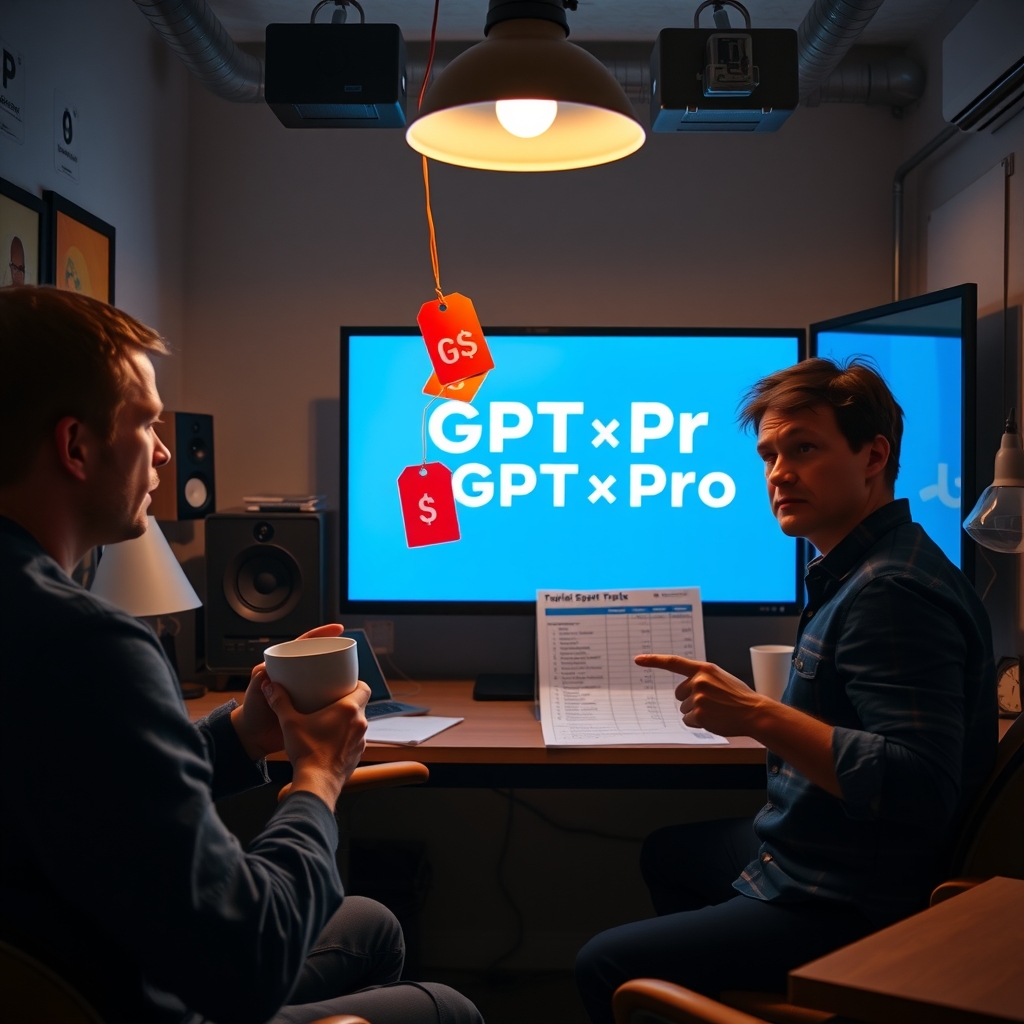
Amid this anxiety, domestic large models have quietly risen, achieving systematic breakthroughs in algorithm optimization, data pipelines, and hardware adaptation.
By using techniques such as mixed‑precision training, sparse activation, and knowledge distillation, these models have reduced inference latency by nearly 40% while maintaining their parameter scale, enabling higher throughput on the same hardware.
More importantly, thanks to localized data sources and corpora that fit the local context, their finesse in Chinese understanding and generation has approached—and in some cases surpassed—that of comparable international products.

Take, for example, a newly founded ed‑tech company that originally planned to use GPT‑Pro to power its intelligent essay‑grading system, with an average monthly usage of about 5 million tokens, forcing the budget to be squeezed down to 8,000 yuan.
After switching to the domestic model, the monthly fee dropped to 4,200 yuan while maintaining the same service quality; the saved 3,800 yuan was directly invested in teacher training and course content development, boosting the platform’s user retention rate by 15% within three months.
The founder remarked in an internal meeting: ‘We used to constantly struggle between compute power and our dreams; now we can finally spend money where it truly enhances the user experience.’

—— END ——
Just saw the numbers—domestic model hitting GPT‑Pro levels at half the price is really striking. Makes me think about how small teams can now afford to experiment without burning cash. Excited to see what apps pop up next.
Half the cost is the hook, but does that include inference optimization engineering hours? We switched a pilot last month, the token price looked great on paper until we hit the context window limits on long-doc RAG. Curious which benchmarks you used for the ‘approaches’ claim — MMLU-Pro or something internal?
It’s impressive that domestic large models are hitting GPT‑Pro‑level scores at half the cost. This shifts the economics of model deployment, though actual usability still depends on fine‑tuning and latency.
Interesting to see domestic models nearing GPT‑Pro performance while cutting cost in half. Curious about the specific benchmarks used and whether the results hold across varied tasks. Thanks for sharing.
Nice read—seeing domestic models match GPT‑Pro performance while cutting costs in half is impressive. It’d be great to see more details on their training data mix and inference latency.
Benchmarks look solid on paper, but the real test is production latency and context handling at scale. Half the cost is huge if it holds up under load. Anyone running stress tests yet?
Been running internal benchmarks on the new Qingyan/GLM builds last week. The gap on MMLU-Pro and LiveCodeBench is genuinely negligible now for most enterprise RAG workflows. The 50% cost saving isn’t marketing fluff — our API bill dropped 40% after migrating the classification layer. Still hitting edge cases with long-context reasoning over 128k tokens, but for 90% of prod tasks? It’s a no-brainer switch.
Interesting to see domestic models catching up on performance while cutting cost in half. Makes me wonder about the trade-offs in training data and inference latency. Have you tried running any of these models on a modest GPU setup?
I ran a few tests with this domestic large model and it’s striking how near it gets to GPT‑Pro performance while cutting the cost in half. The response time is a tad higher than the flagship, but still well within acceptable limits for most production use‑cases. Excited to see how teams adopt it in real‑world apps.
Read the article today and found the numbers striking—domestic models hitting GPT‑Pro level performance while cutting cost in half. The benchmark details look solid, though I’d love to see more real‑world latency tests. Nice work!
Just tried the new domestic model demo; impressive speed and quality for half the price of GPT‑Pro. Makes me think about switching my side‑project backend.
I gave the domestic large model a spin on a few coding prompts and was impressed—its output quality is noticeably close to GPT‑Pro while the cost is roughly half. Response time feels smooth for most routine queries, though I did notice a slight dip when the task required multi-step reasoning. Still, it’s a solid step forward for affordable AI access.
Interesting to see domestic models catching up to GPT‑Pro performance while halving the cost. The benchmarks look solid, though I wonder how they hold up in real‑world applications like long‑context reasoning. Still, it’s a promising step for the ecosystem.
Interesting to see domestic models catching up to GPT‑Pro while cutting cost in half. The benchmarks look solid, though I wonder how they handle edge cases in Chinese language tasks. Anyway, promising progress.
Nice read—seeing domestic models hit GPT‑Pro levels at half the cost is promising for everyday apps.
Really interesting to see domestic models hitting GPT‑Pro levels at half the cost. The numbers line up with what I’ve observed in our internal tests. Curious about the specific datasets used for the evaluation.
Just gave the new domestic model a spin on my laptop—surprisingly close to GPT‑Pro in speed and quality, and the price tag really does feel half. Nice to see progress happening now.