
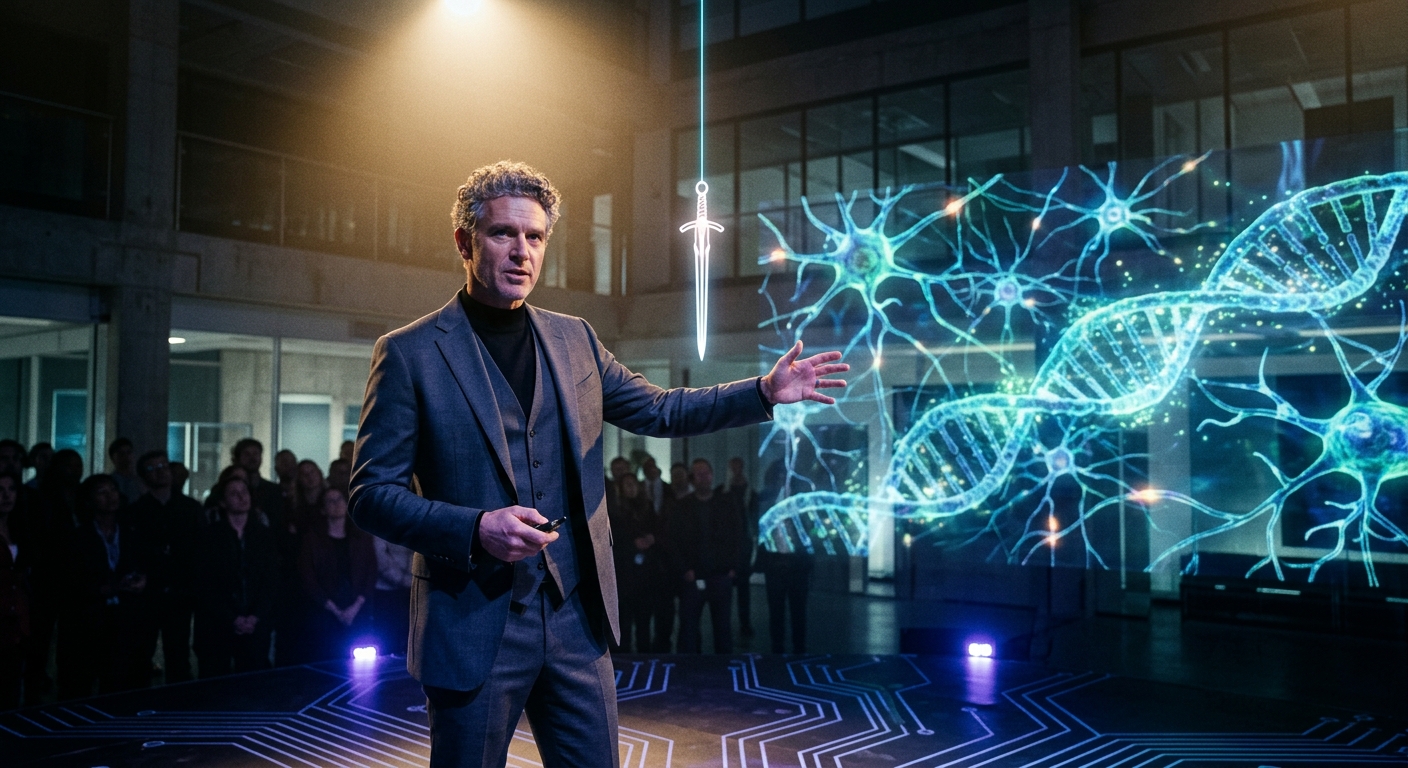
When the man known as the “Silicon Valley Madman” stood under the spotlight, spending three solid hours tearing away the curtain of the future, the Sword of Damocles of our era was already hanging over the heads of all humanity. This was no ordinary tech launch; it was an ultimatum regarding the survival rules of carbon-based lifeforms. In a tone both ruthlessly cold and feverishly passionate, Musk declared an irreversible, brutal truth to the world: the singularity where artificial intelligence comprehensively surpasses humanity has arrived. And the first to be sent to the guillotine and thoroughly reshaped will be the very industry we once thought most sacred and indestructible—healthcare.
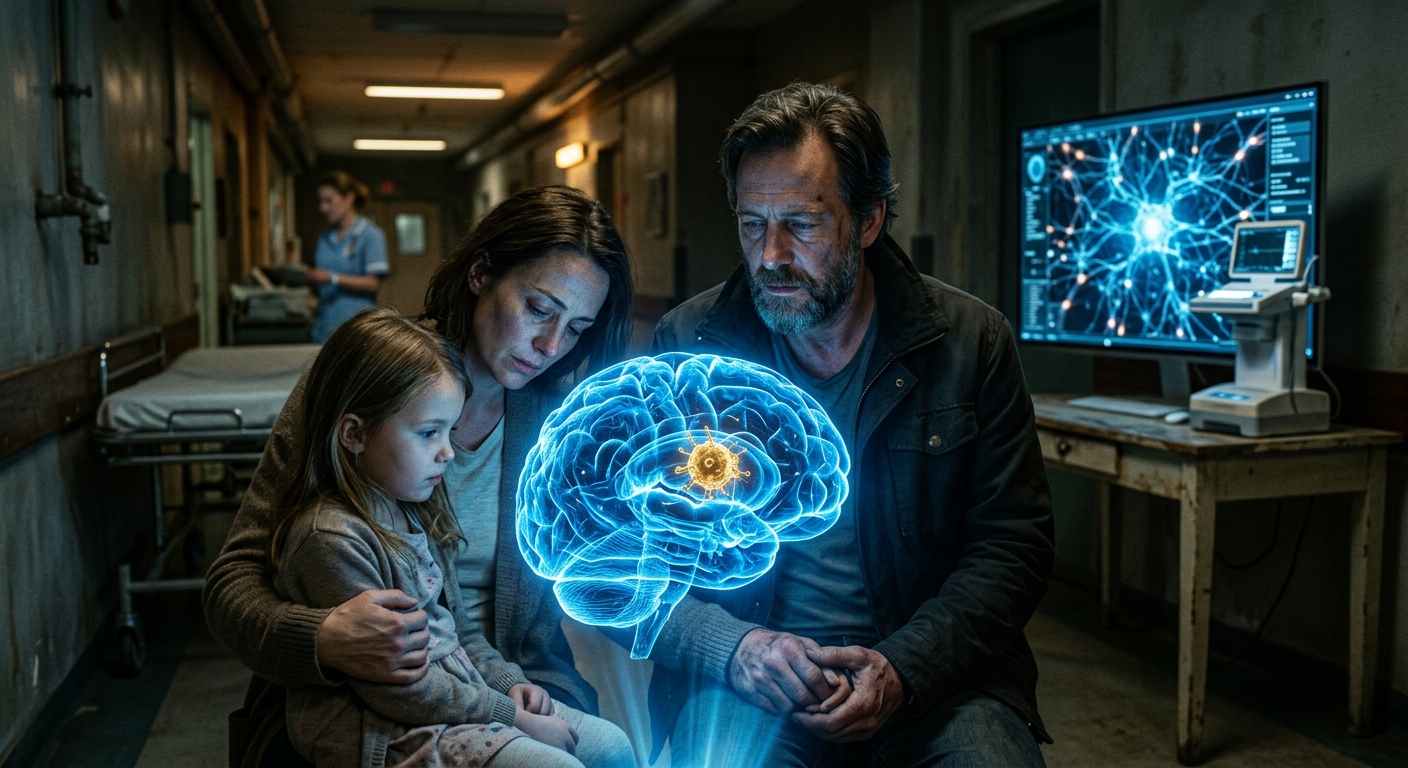
Close your eyes and recall the powerlessness you felt when you or your family paced anxiously in an ER corridor late at night, staring at the long lines at the triage desk, smelling the pungent scent of disinfectant, and entrusting your entire life to a stranger. For centuries, we have been accustomed to treating doctors as God’s proxies on earth. We have tacitly accepted the agonizing waits, the exorbitant costs, and even the inevitable misdiagnoses, because “doctors are only human.” But after this speech by Musk, this mutual compromise between carbon-based lifeforms will be utterly shattered. Silicon Valley’s chips and algorithms are looking down coldly upon this riddle-filled modern healthcare system with an overwhelming, multidimensional strike.
Must we continue to deceive ourselves, believing that mortal doctors—who must memorize medical textbooks for a decade and stand at the operating table for over ten hours a day—can forever withstand untiring digital lifeforms with infinite computing power? As AI’s tentacles reach deeply into every microscopic dimension of genetic sequences, protein folding, and neuronal firing, a silent yet exceptionally brutal mega-shake-up has already begun. This is not merely a changing of the guard for jobs; it is a historic transfer of dominance over human life itself.
Historically, the medical field has been regarded as humanity’s ultimate “iron rice bowl.” That white coat seemed like a bulletproof vest, insulating its wearers from economic fluctuations and the shocks of technological turnover. A medical student must endure five years of undergrad, three years of residency, and perhaps even postdoctoral research just to barely earn the ticket to stand at an operating table. We revere this ascetic, elite training model because medicine is vastly complex and the mysteries of the human body are infinitely profound. However, the human brain ultimately has physical limits. How many medical papers can a top expert read in a lifetime? How many complex cases can they diagnose? Ten thousand? A hundred thousand? This is the sorrow of carbon-based lifeforms: our experience requires decades of accumulation, yet it can be instantly wiped to zero by a stroke, the onset of aging, or even a sudden car accident.
And what about AI? When Musk displayed those chilling statistics on the screen, a shiver went down the spine of every healthcare professional. A state-of-the-art medical AI large model can, in the 0.3 seconds it takes to sip water, memorize and recall tens of millions of medical papers published by humanity over the last century. It can cross-reference millions of rare disease gene mutations globally in a single second, pinpointing a fatal flaw that would take humanity’s top expert teams three months of consultation to discover. It doesn’t need coffee to stay awake. It won’t lose focus while reading a scan because of an argument with a spouse the night before. And it certainly won’t sever the wrong microvessel due to hand muscle cramps after eight continuous hours of surgery.
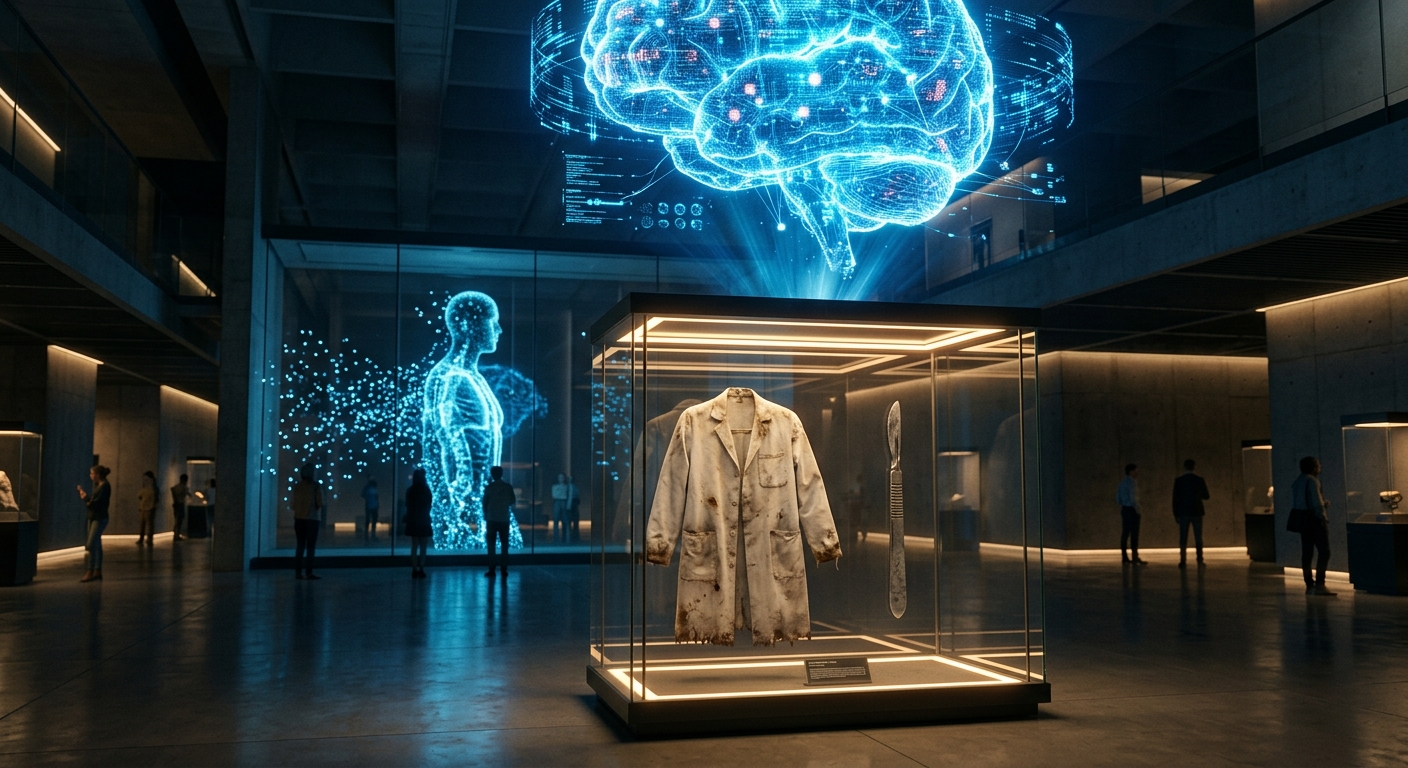
Faced with such an entity, the “empiricism” of human doctors appears incredibly flimsy and laughable. You might think that the highly sought-after expert appointment you secured at a top-tier hospital is a guarantee for your life. But before AI’s absolute rationality and god’s-eye computational power, it is nothing more than a roll of the dice in the realm of probability. When nano-scale robots, commanded by AI, navigate through your blood vessels to perform targeted eradication of cancer cells, that blood-stained traditional scalpel is destined to become a dusty, primitive stone tool in a medical museum.
So, how exactly will this roaring mega-shake-up slaughter the current ranks of healthcare professionals? Many naively believe that AI is merely an auxiliary tool at best, tasked with writing medical records and organizing data, while humans make the final call. Such thinking is as foolishly blind as the carriage drivers who mocked early automobiles for being slower than horses. The butcher’s knife of this shake-up will first strike those who occupy massive payrolls in the medical system yet only perform mechanical, repetitive cognitive labor: mediocre radiologists, assembly-line lab technicians and pharmacists, and grassroots doctors who do nothing but prescribe antibiotics by the book.
You might think your work is the sacred act of saving lives, but in the eyes of AI, it is nothing more than low-level code operations of “image recognition” and “decision tree matching.” When AI can directly generate diagnostic reports and targeted medication guides with 100% accuracy, those massive outpatient buildings, crowded registration halls, and even the heavily gatekept referral systems in hospitals will lose their reason to exist. The hospital of the future will no longer be an overcrowded physical structure, but a colossal cloud computing center, working in tandem with advanced sensors and automated surgery pods distributed in every corner of the community.
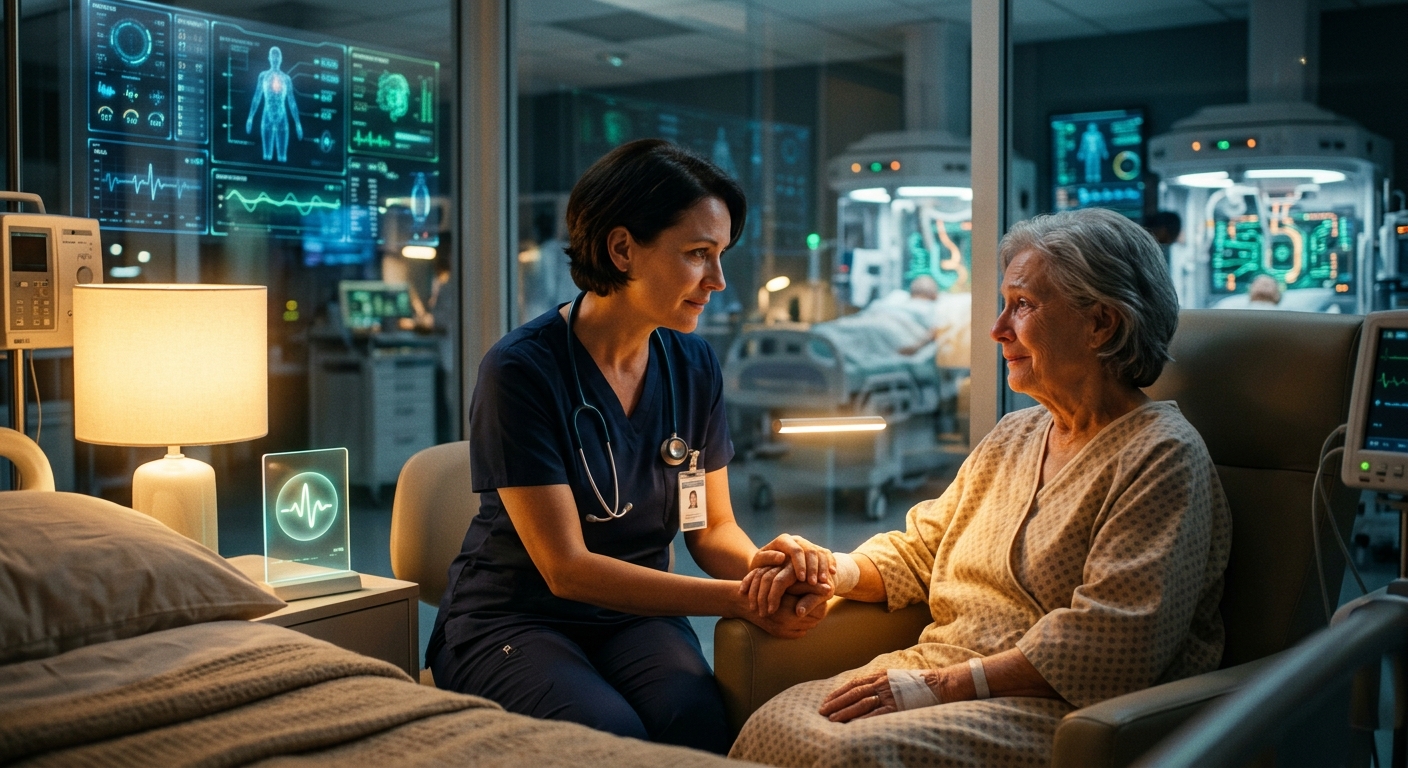
However, this does not mean the medical profession will go entirely extinct; it will simply be violently condensed. Only two types of people will survive this shake-up. The first are the “Medical Architects” who fully embrace AI and can command super-algorithms to conduct cutting-edge exploration in human life sciences. The second are the “Life Comforters” who provide the “emotional value” that machines can never offer. When diagnostics and treatments are entirely taken over by machines, a doctor’s only remaining job will be to hold the patient’s hand, look them in the eyes, and offer the sympathy, understanding, and end-of-life care unique to carbon-based lifeforms. Ironic, isn’t it? The healing techniques doctors have painstakingly pursued for millennia will be ruthlessly stripped away by machines, and what ultimately saves their profession will be the very “humanistic care” they once so often dismissed.
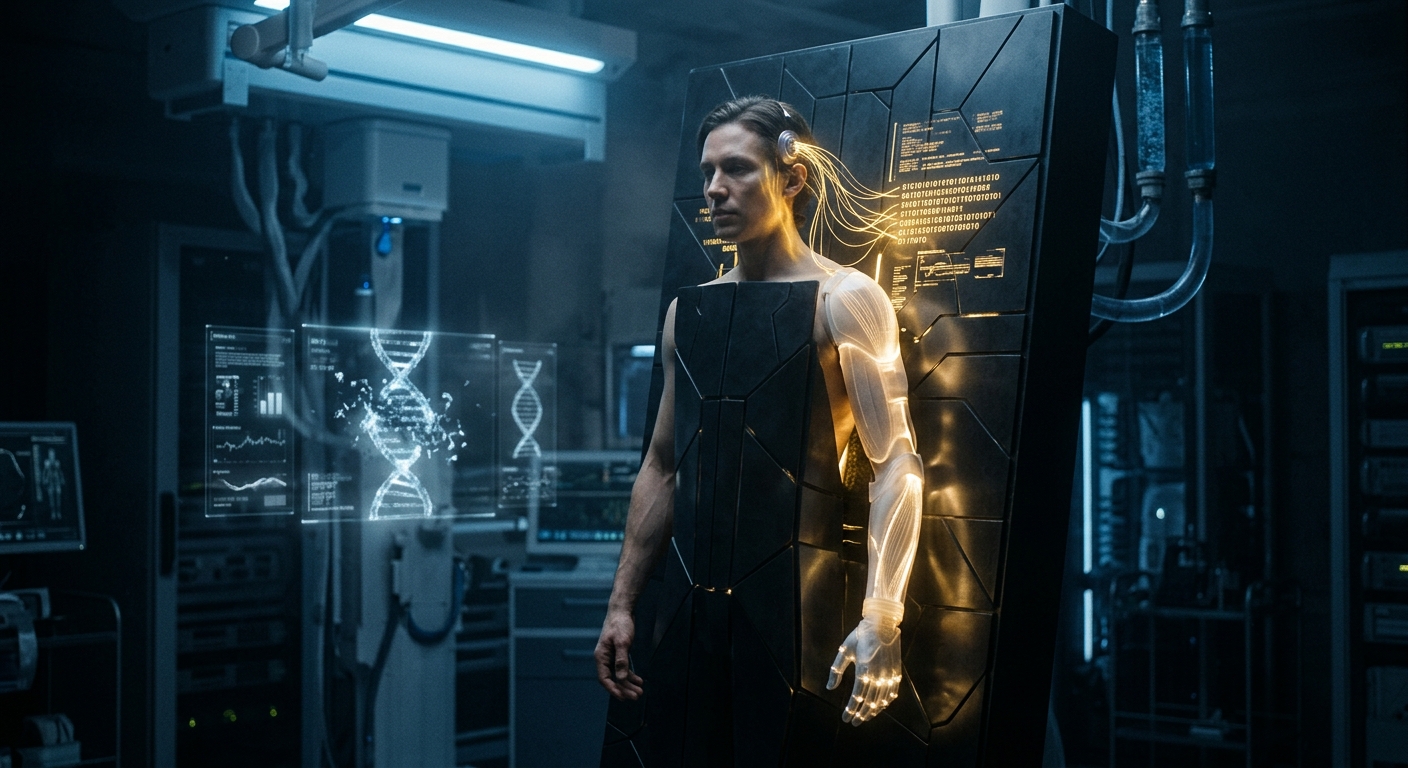
Musk’s ambition absolutely does not stop at building a machine to replace doctors in treating patients. What was truly spine-chilling about those three hours was his prophecy regarding humanity’s ultimate evolution. The healthcare mega-shake-up is just the first step. When AI masters colossal amounts of human biological data, and when brain-computer interface technology seamlessly links human neurons with silicon-based chips, the ironclad laws of nature as we know them—birth, aging, sickness, and death—will be forcibly rewritten.
Imagine that crazy near future: Alzheimer’s will no longer be an incurable terminal illness, because AI can send electrical signals directly to your declining brain regions, rebuilding your memory networks. Patients paralyzed for years will be able to stand up and run again, because the interfacing latency between mechanical exoskeletons and the nervous system will have been reduced to zero by AI. The pharmaceutical R&D cycle will shrink from the current ten years and billions of dollars down to mere days, during which AI will synthesize a peerless targeted drug custom-made for your specific genetics, following billions of virtual molecular collisions in simulated labs.
But behind all this hides an utterly terrifying ethical abyss. When human organs can be printed and replaced at will, when our consciousness can be uploaded, modified, and even downloaded by AI, can we still purely call ourselves “human”? In this process, the tech titans who control top-tier medical AI and computing supremacy will become the new creators, towering above all national sovereignty. The wealthy will achieve physical “immortality” and “super-evolution” through exorbitant AI healthcare services, while the poor will be left to struggle bitterly in an obsolete, discarded medical system. This is no longer a simple wealth gap; it is a fundamental, biological schism of the human species.
—— END ——
Yeah, I caught part of Musk’s three‑hour talk yesterday. He’s right that AI is already shaking up clinical workflows—especially in imaging and triage—but saying it’s already surpassed humanity feels a bit premature. Most hospitals are still piloting tools, and we need solid validation before we trust them with life‑critical decisions. Still, the hype is definitely speeding up funding and partnerships, which could be a net positive if regulators keep pace.
Hey, just finished reading the recap of Musk’s three‑hour talk. While his vision of AI overtaking humans certainly grabs headlines, I think the healthcare shake‑up is already underway with tools like diagnostic imaging and drug‑discovery platforms. It’s worth separating the hype from the real, measurable outcomes we’re seeing in clinics today. Curious to hear what others think about the regulatory side.
Interesting take from Musk. While his timeline feels aggressive, the point about AI accelerating diagnostics is valid. Still, we need solid regulatory frameworks before we let AI drive major clinical decisions.
Musk’s three‑hour talk definitely grabs attention, and he’s right that AI is starting to reshape diagnostics and patient‑management tools. However, the claim that AI has already “surpassed humanity” feels overstated—most clinical AI still operates under strict physician oversight, and regulatory pathways (FDA, EMA, etc.) are still catching up. Real impact will come from incremental improvements in workflow efficiency and decision support, not a sudden overthrow. It’s worth watching how hospitals balance innovation with safety over the next year or two.
I liked the way he tied AI breakthroughs to real‑world hospital workflows; the examples made the hype feel less abstract. Still, scaling that across disparate health systems will need more than just vision—think data standards and clinician buy‑in. Overall, a stimulating talk.
Interesting take from Musk. While his timeline feels aggressive, I’ve seen some early AI diagnostics already improving triage in ERs this year. The real challenge is integration with legacy systems and regulatory approval, not just the tech itself. Would love to hear more concrete pilots he’s referencing.
Just finished reading the recap of Musk’s three‑hour talk. He really drove home how fast AI is moving into diagnostics and personalized treatment plans—some of the examples he gave (like the real‑time tumor‑tracking model) are already being piloted in a few hospitals I follow. It’s exciting, but I wonder how ready the regulatory side is; the FDA’s AI/ML software as a medical device framework still feels like it’s catching up. Would love to see more concrete timelines for standards rather than just the hype. Overall, a thought‑provoking session that got me thinking about where our own projects might fit in.
Musk’s three‑hour rant was a lot to take in, but the bit about AI‑driven diagnostics really stuck with me. It’s clear the tech is moving faster than the current regulatory frameworks, and we’re going to see some real turbulence in hospitals over the next year or two. Still, if the safeguards catch up, the potential upside for patient outcomes is huge. Thoughts?
Haha, I caught a snippet of Musk’s three‑hour speech and have to say his claim that AI already surpasses humanity feels a bit hyperbolic. Sure, AI is making impressive strides in medical imaging and drug repurposing, but most hospitals still depend on human clinicians for final decisions and navigating complex regulations. It’d be more productive to focus on how AI can augment doctors rather than replace them outright. Still, it’s great to see the debate heating up—got me thinking about the radiology AI pilot we’re running at my clinic.
Really interesting take from Musk’s speech. He’s right that AI is already reshaping diagnostics and drug discovery, but the idea that it will outright “surpass humanity” feels a bit overstated—at least for now. What worries me more is how fast hospitals are adopting these tools without clear oversight; we could see a lot of efficiency gains, but also new risks if the models aren’t properly validated. Would love to see more concrete proposals on regulation alongside the hype.
I watched the clip of Musk’s three‑hour talk yesterday. His point about AI already outpacing human decision‑making in diagnostics feels overstated—there are still plenty of cases where clinicians catch nuances that models miss. Still, the acceleration in AI‑driven triage tools is real, and hospitals are definitely scrambling to integrate them. It’d be interesting to see how regulatory bodies keep up, especially with patient privacy concerns. Overall, a provocative speech that’s sparking the right kind of debate.
Ha, yeah—I caught Musk’s three‑hour talk yesterday. His point that AI already beats humans on some diagnostic tasks lines up with the pilot projects we’ve seen at a few big hospitals. The room was buzzing, but I’m still wondering how fast regulators can catch up. It would be nice to see hard outcome numbers soon; otherwise the hype might run ahead of actual impact. Anyway, feeling good after the discussion.
Hey, just finished reading the piece. Musk’s take on AI overtaking human decision‑making in healthcare is definitely provocative, and I agree we’re already seeing early signs—like AI‑assisted diagnostics cutting down radiology wait times in some hospitals. That said, the leap from “assists” to “replaces” still feels a ways off, especially when you factor in regulatory hurdles and the need for clinician oversight. Would love to see more concrete pilot data rather than just the headline numbers. Overall, a thought‑provoking read that got me thinking about where we actually stand today.
Musk’s talk definitely grabs attention, but the real challenge in healthcare isn’t just the tech—it’s getting hospitals, regulators, and patients on board. AI tools need solid validation and clear liability frameworks before they can truly shift practice patterns. Still, it’s exciting to see the conversation pushing the envelope.